Report: Whose history do we choose to remember? About public spaces, statues and cultural choices.
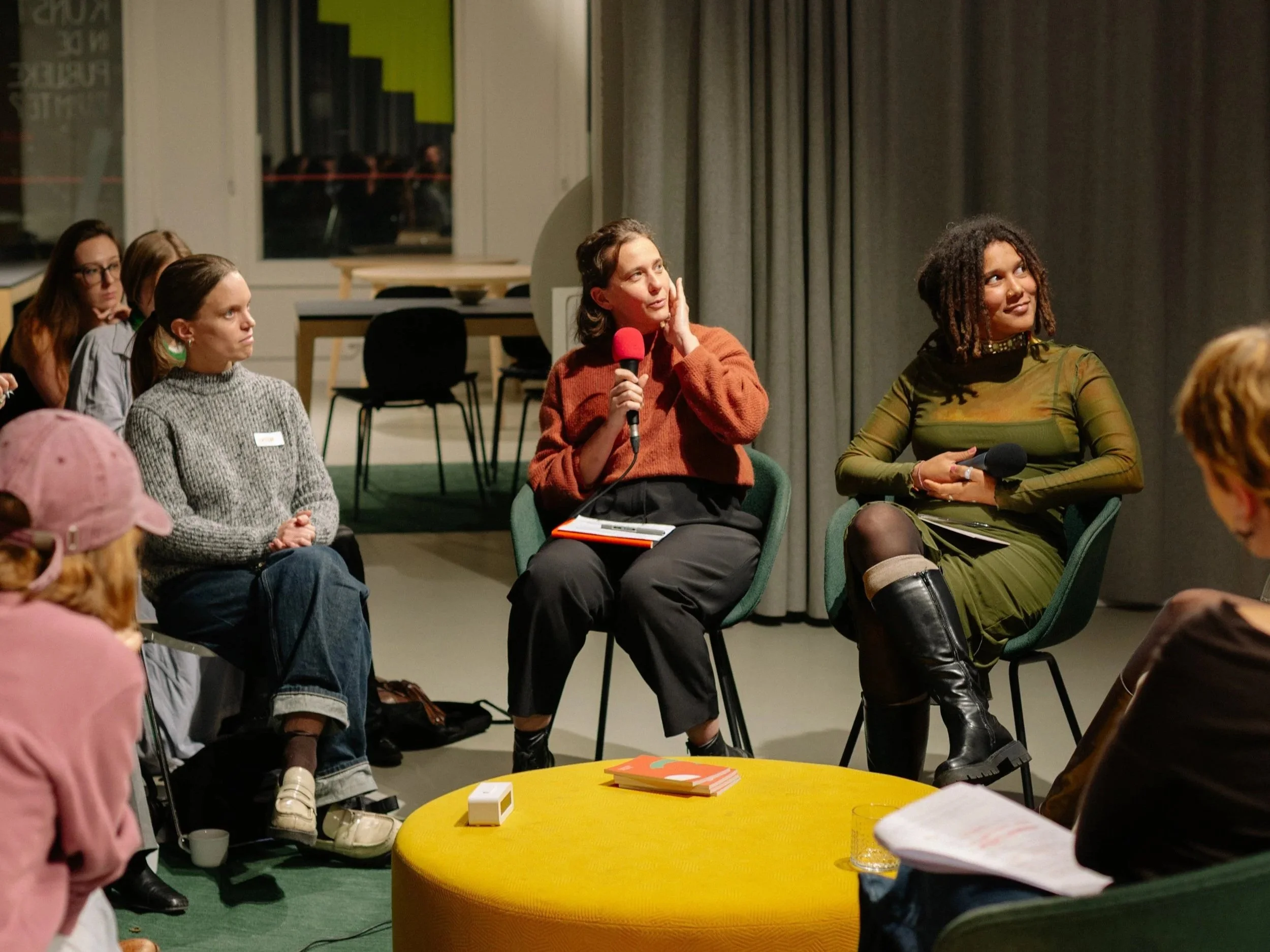
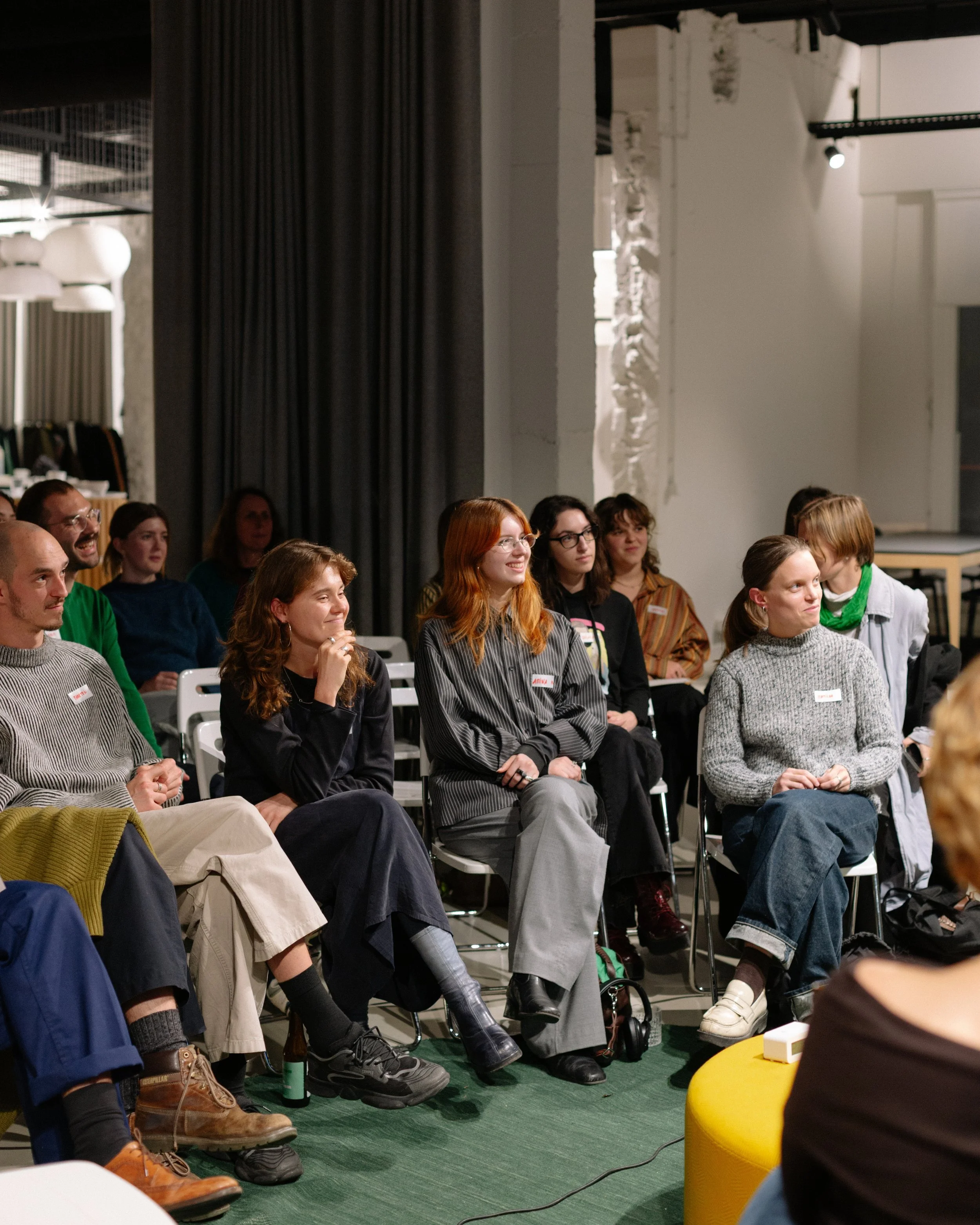
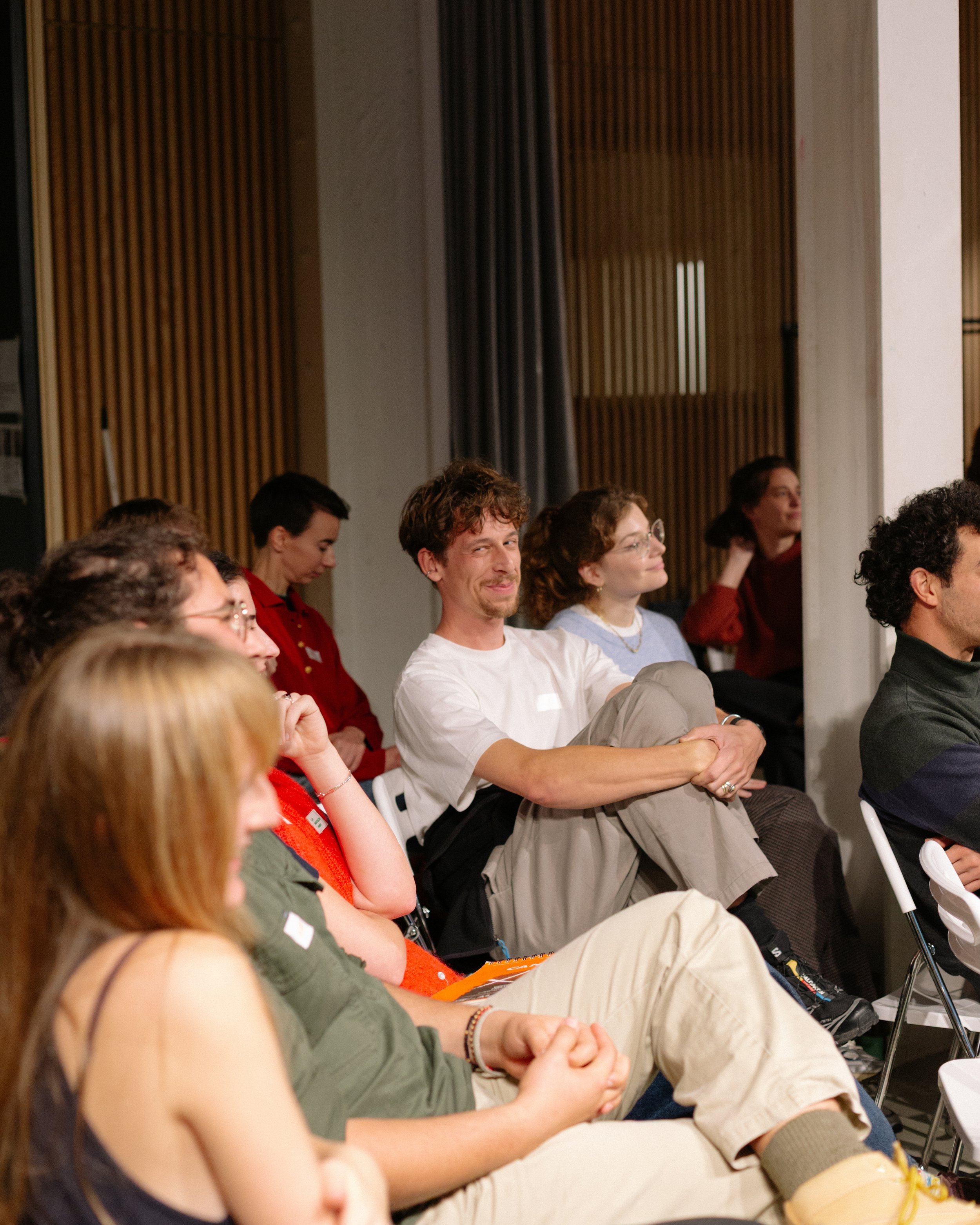
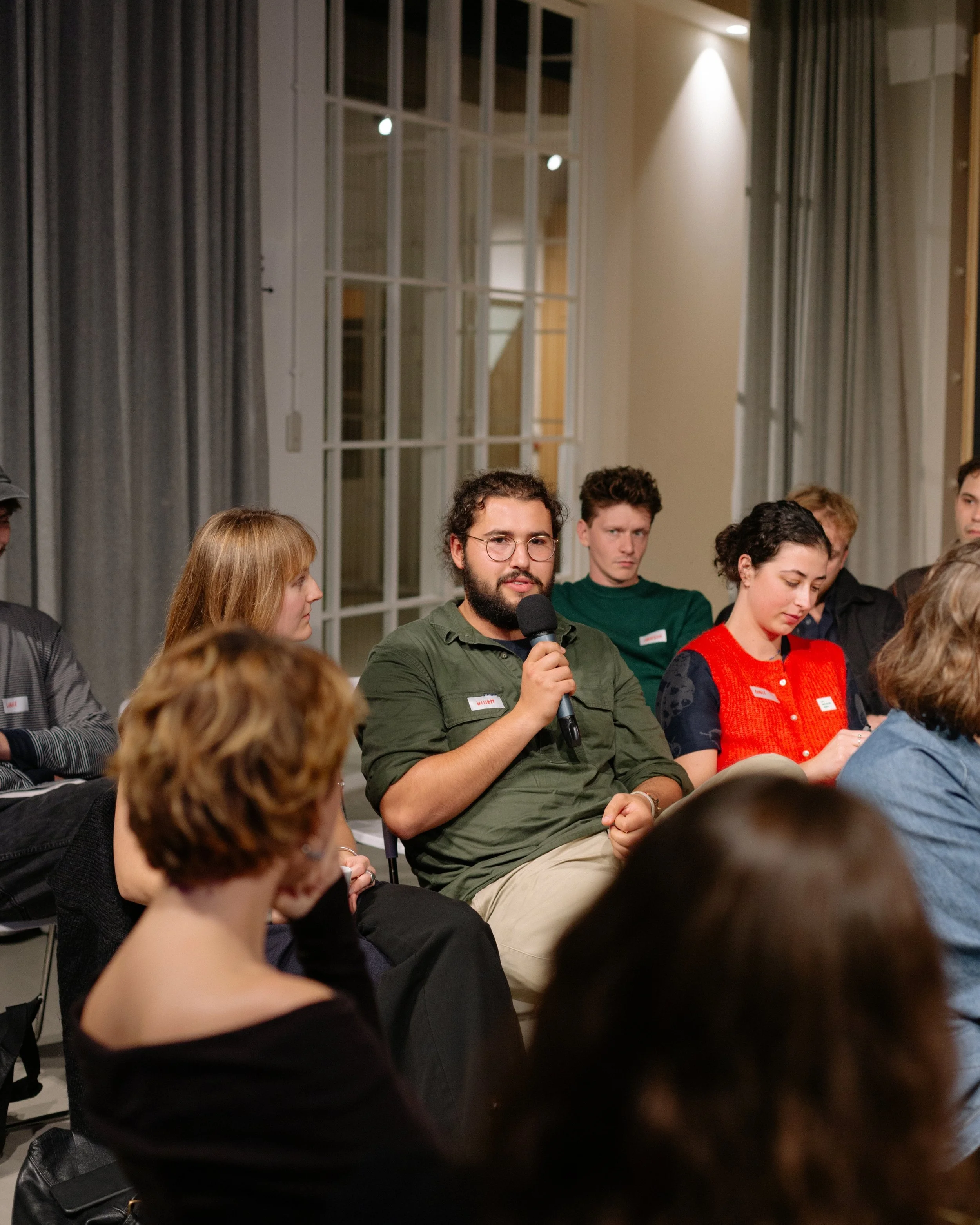
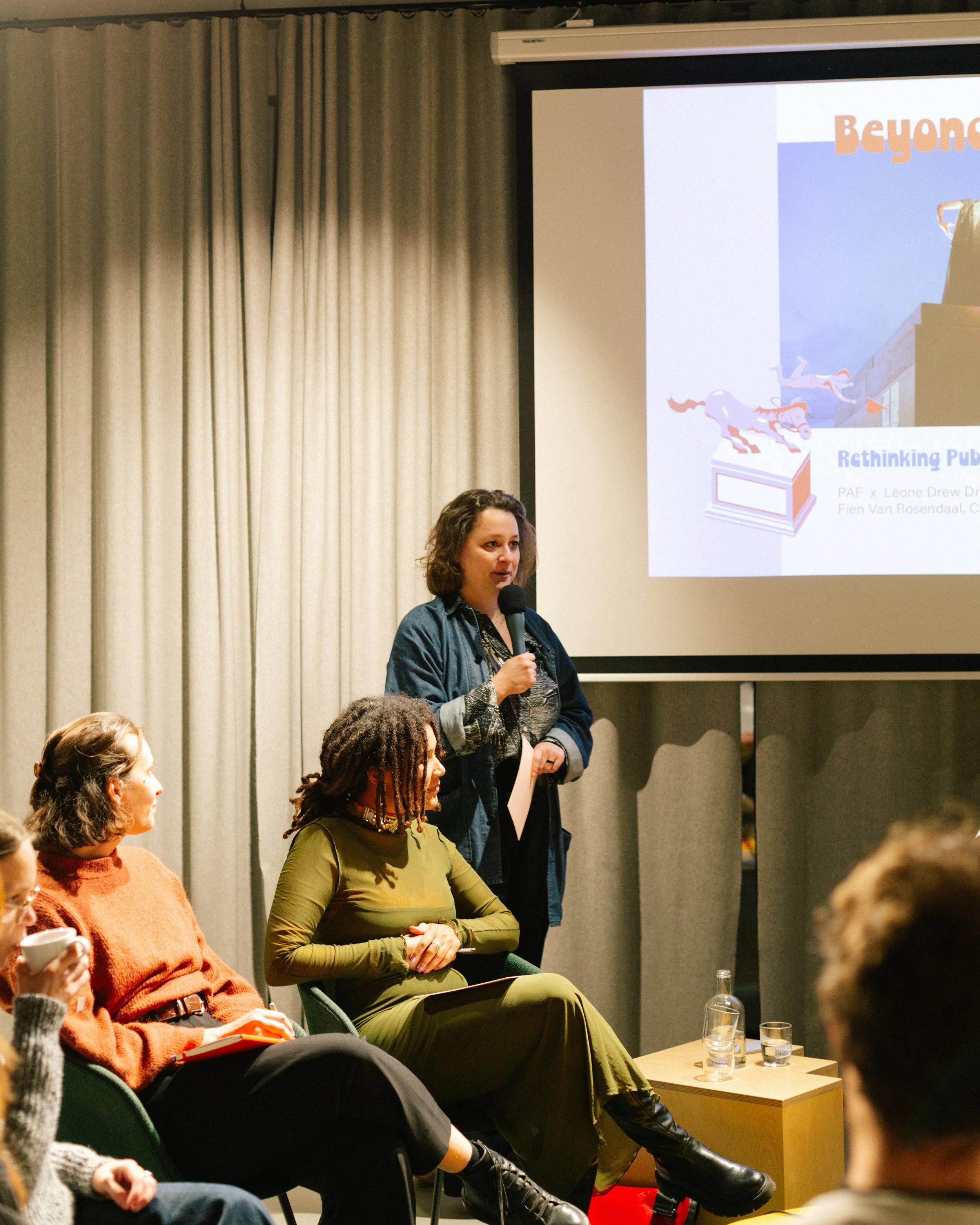
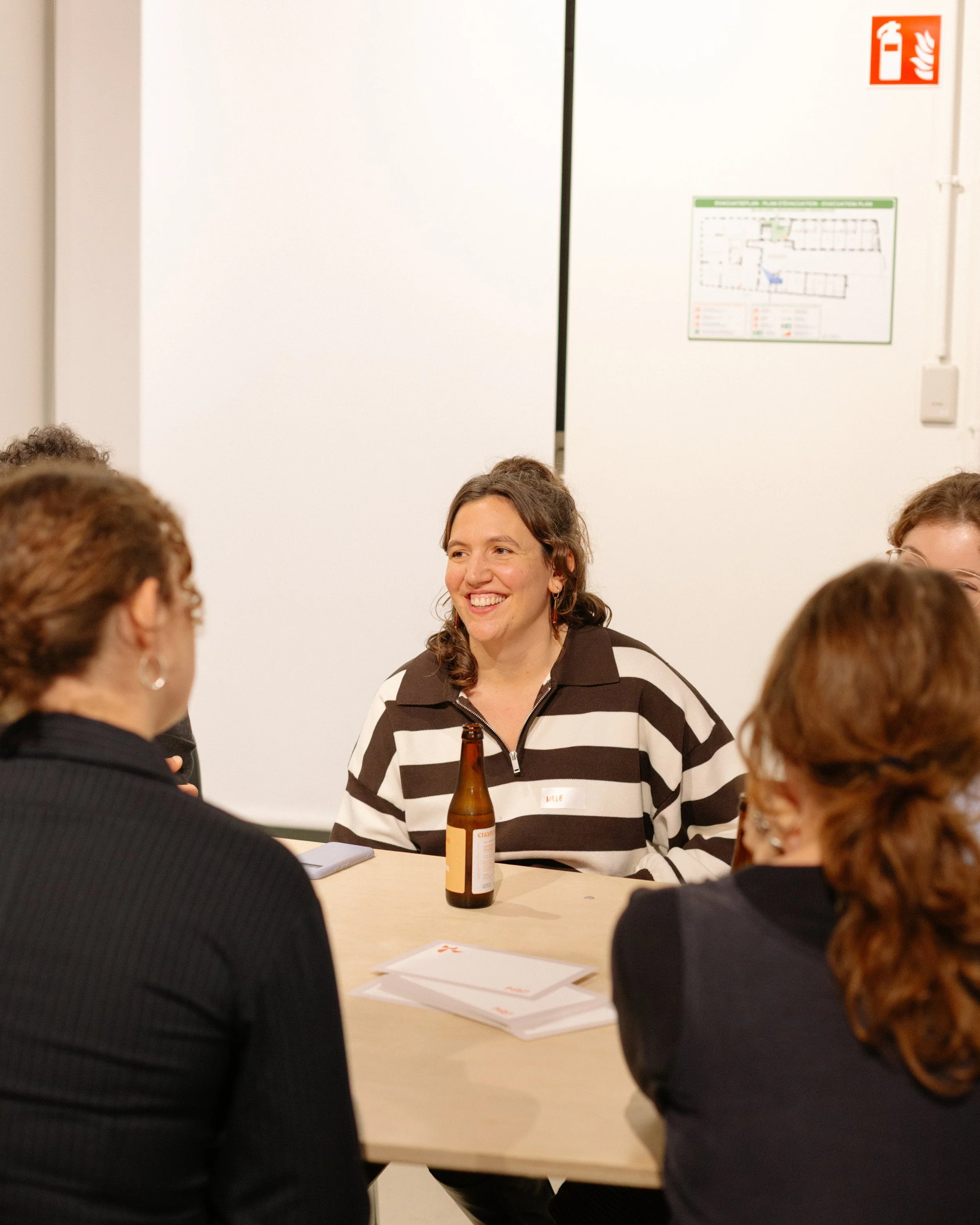
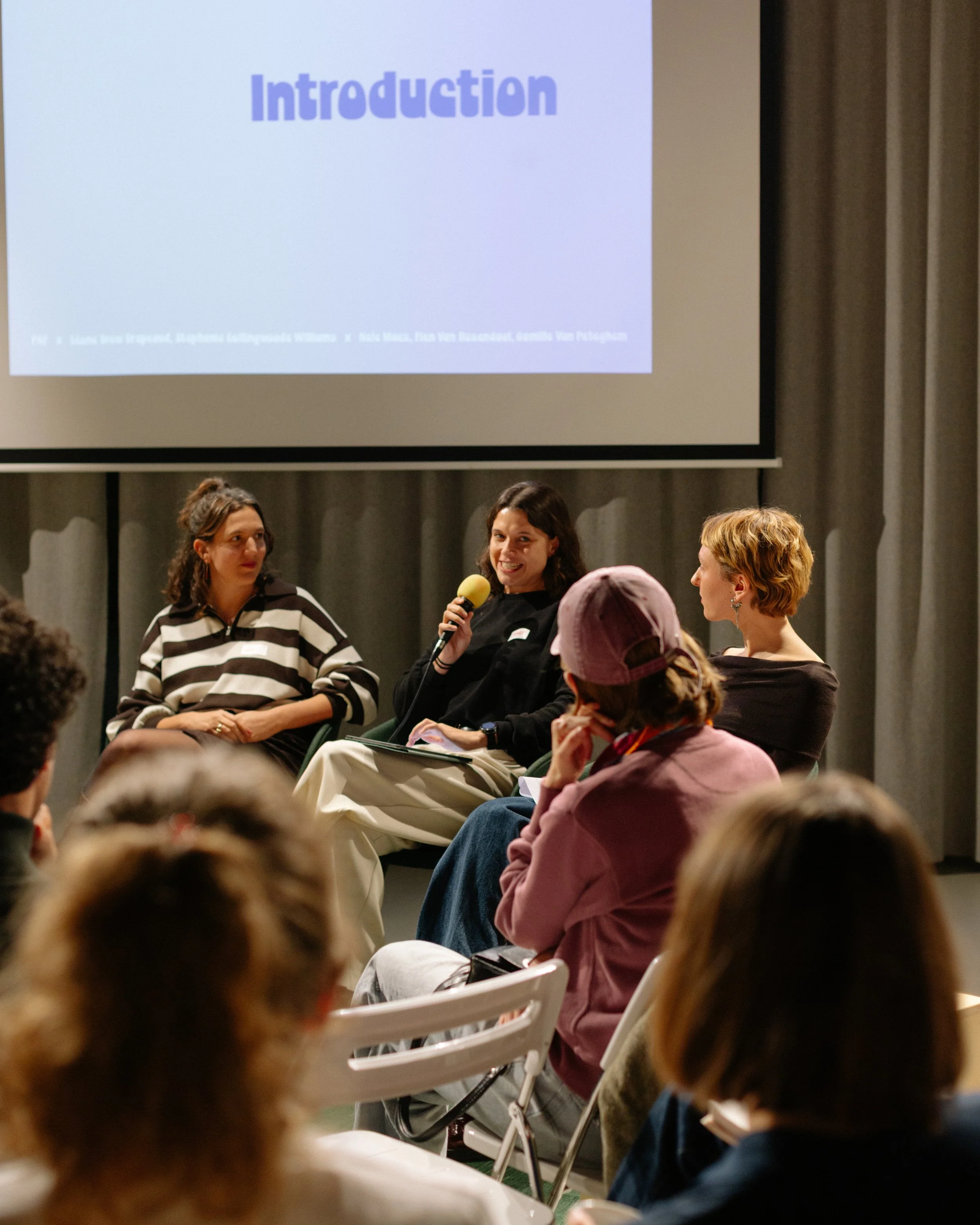
On the thirteenth of November, PAF brought together interdisciplinary curators and speakers to discuss how monuments and public spaces continue to reflect narrow, often gendered and colonial narratives, and how these can be reimagined. The curators consisted of Nele Maes, urbanist and researcher at Erasmushogeschool Brussels and Titaantjes Collectief, Camille Van Peteghem, a legal researcher at KU Leuven, and Fien Van Rosendaal, a cultural sociologist. Among the speakers were Stephanie Collingwoode Williams, an anthropologist who is also part of the Congolese-Belgian filmmakers collective Faire-Part, and Léone Drapeaud, an architect and co-founder of the collective Traumnovelle. The panel discussion was moderated by Nele Maes.
Text: Dilara Kabak
Photos: Tatjana Huong Henderieckx
Listen to the full audio recording of the discussion evening.
-
I can almost see you thinking: “What does a lawyer have to say about public space and gender to a group of architects?”
Let me start at the beginning. I was barely an adult when I walked through the gate of KU Leuven’s law faculty for the first time - an ancient pile of stones designed to impress and intimidate. I was a young woman filled with ideals about justice. It didn’t take long before those ideals were put under pressure.
Everywhere I looked, I saw portraits and statues telling the same story: old, white, upper-class men in stiff suits, wearing the same serious expression. They were always portrayed as individual leaders - professors, politicians - as if they had made it entirely on their own. The networks and care that allowed them to rise to those positions were all erased.
The same story echoed in what was taught within those walls. During my entire bachelor’s degree, I was taught by only one woman. Discussions of our history of institutionalized patriarchy and colonialism were largely absent, even though our legal system still bears their painful scars. In private law, professors in expensive tailor-made suits told us it was “reasonable” to act selfishly in our private relations.
When I dared to ask questions, the answers reinforced that exclusion. A family law professor publicly shamed me for defending equal custody rights for men of young children. Another laughed when I asked about intercultural awareness among judges and advised me to change the topic for my PhD. I didn’t.
Later, as a researcher, it wasn’t hard to draw a straight line between the parade of pale male portraits in the hallway outside my office and the hierarchy within it. Professors asked me or my female colleagues to fetch lunch or comfort male coworkers “because women are good at that.”
I could go on for hours, but the main thing is this: between the rules of law, I learned another lesson - what it means to be “valuable” in the legal world. It was read to us in lecture halls and illustrated on their walls. Gradually, I felt uneasy, as if I had to squeeze into a costume that didn’t fit. Probably an expensive tailor-made suit.
I began sharing my experiences through a gender equality platform, Lean In Leuven Law, and realized I was not alone. My real breakthrough came when I helped organize the commemoration of 100 years of female students at our faculty. I volunteered to research the first woman who ever studied law there: Germaine Cox.
I had the privilege of speaking with her grandchildren, and one anecdote struck me like lightning. When Germaine entered her first class in 1920 as the only woman in the room, the professor greeted her by saying:
“Miss, you are neither expected nor welcome here.”
A lot has changed in the law faculty since 1920. Women now make up the majority of students. But beneath the polished surface of neutrality, the underlying message often sounds painfully familiar. I had heard it in my lectures, through the broadly smiling teeth of professors claiming to be neutral. I had read it on the faculty walls, in portraits framed as natural depictions of our history. A silent but persistent whisper: You are neither expected nor welcome here.
And if that is how I felt - as a white, middle-class woman - I can only imagine how others, such as people of color, must have experienced it. Exclusion is always intersectional.
So what did we do? In honor of Germaine Cox, we decided to give her a place in the university building - not as another lonely portrait, but as a pioneer highlighting the relational web of women who followed in her tracks. We created a mosaic portrait, made from photographs sent in by female students and staff over the years. A collective face built from the efforts of many.
Since then, I’ve seen similar initiatives in other faculties: posters of alumni instead of professors, portraits of technical staff alongside academics, participatory art projects replacing top-down decisions.
Symbolic gestures, sure. But symbolism matters. It took me years to realize that what felt like personal inadequacy was in fact structural injustice: that the stories we tell through the design of our shared spaces define who gets to belong there. And this got us - Fien, Nele, and me - thinking.
Just as a law faculty tells a story about who belongs in the legal world, our public spaces tell a story about who belongs in the civic one - who is seen and heard as a worthy citizen, who is expected and welcome here. And while our formal laws have changed - women gained the right to vote in 1948, Congo gained independence in 1960 - the proverbial hallways of our society remain lined with the echoes of patriarchy and colonialism. The common lecture hall that is our public space is still colored by their exclusionary ideals.
Statues, monuments, street names - our public space tells a story about who we are. But it is not a simple mirror of society - not of its past, nor of its present. It reflects a series of cultural choices grounded in ideology. These choices are not written in our DNA; they are stories we write together.
So what kinds of choices are we making when we write that storyline in stone? These are choices about who, how, what, when, and ultimately why. They represent the main characters, how they are stereotyped, as well as the plotline of the story - which together reveal a specific genre of our societal narrative.
First: who do we choose to represent? What types of individuals get public recognition?
Across Western monument culture - in the United States as well as in Europe, including Belgium - public commemoration overwhelmingly celebrates white, male, elite figures, while women, people of color, and LGBTQ+ individuals remain largely absent.
But it’s not just a matter of numbers - of how many women or men we see - it’s also about how they are represented.
Take the statue of Molly Malone in Dublin. She is a folklore figure represented wheeling a cart at street level, right in the middle of a busy pedestrian zone, where tourists and locals pass her daily. She is part of the crowd rather than elevated above it. Her accessibility has come at a cost: her breasts have been touched so many times that the bronze has changed color. A seemingly innocent public ritual for “good luck” that reveals not-so-innocent assumptions about the role of women.
Meanwhile, statues of men tend to tell another story. They tend to commemorate named historical leaders, like Winston Churchill or King Leopold II, portrayed in heroic, authoritative poses rather than in acts of labor. They occupy central, symbolically charged locations, far removed from the pedestrian flow that surrounds Molly Malone. Their physical elevation on pedestals mirrors their symbolic distance from ordinary life. And their treatment reflects that hierarchy: during the 2020 protests, Churchill’s statue was boxed to shield it from public touch, while the graffiti on Leopold’s monument was condemned as vandalism rather than understood as a new kind of public ritual.
Representation is never neutral. Every choice in how we present a type of individual expresses a hierarchy of value. Are figures real or allegorical? Elevated or placed at ground level? Are they positioned in central places or peripheral areas? Protected or exposed?
Research shows that while men are almost always depicted as named individuals, women tend to be cast as mythical figures or allegories like Justice or Liberty. Art historian Sierra Rooney calls this “allegorical displacement”: symbolic inclusion without real recognition. As for location, a comparative study shows that Brussels gave women the least visible sites. Form reinforces those hierarchies: men tend to stand alone, high on pedestals; women are horizontal or half-hidden. And as for treatment: Molly Malone is not the only one subjected to groping by the public. Juliette in Verona meets a similar fate. Which monuments we protect and which we allow to be violated exposes a deeply gendered and racialized politics of care.
Yet it’s not just about who or how we represent. It’s also about what we decide is worth remembering in the first place.
Do we glorify the individual hero, or honor the communities that surrounded them and made their victories possible? And if we pay attention to the social context, what kinds of relations do we commemorate: domination or cooperation, conquest or care? And what kind of care: family or friendship?
Monument culture remains overwhelmingly individualistic and militarized, glorifying generals and statesmen while erasing caregivers, activists, and ordinary citizens. Monuments to nurses, domestic workers, victims of sexual violence, or queer and non-familial love remain rare. These absences express an ideology about which social relations and communities are recognized and valued in society.
Beyond what we remember, there is also a decision about when we decide to remember: whether we treat our history as something closed and complete that the public should simply absorb, or as something still unfolding in which we can all participate.
Traditional monument culture tends to prefer permanence over participation - it petrifies identity, offering the illusion of social stability. Art historian Kirsten Pai Buick calls this cultural hoarding: we trade a dynamic, changing public space for the illusion of fixity. But monuments are not historical documents; they are expressions of a community’s self-understanding at a given moment - understandings that age and lose resonance.
And this brings us to the deeper question: why do we design public space one way rather than another?
Why choose permanence over participation, authority over inclusion, individuals over community? These choices embody implicit assumptions about the social function of our public spaces. Should public space impose clear order, or create a more complex space of shared belonging? It reveals different logics of social organization: hierarchy or equality. Domination or freedom.
Whenever we talk about rethinking our monuments or redesigning public space, a common argument is that it is all “mere symbolism.” That changing a statue or a street name is superficial, cosmetic. But that is profoundly mistaken. Symbolism is not secondary to human life. It is its very core. As Harari writes, Homo sapiens is a storytelling animal. We organize our laws, economies, and moral worlds through cultural stories that exist only in our shared imagination. To say that something is “mere symbolism” to the human mind is like saying that something is “mere oxygen” to the human body. It is not an accessory to collective life. It is what makes collective life possible.
And just like oxygen, our collective stories are often invisible. And this brings us to the problem at the heart of our discussion tonight. When symbols become so familiar that we stop noticing them, the underlying power dynamics and inequalities become further entrenched. In the past, exclusion was explicit; today it hides behind the façade of neutrality, presenting itself as natural or self-evident.
We absorb these stories unconsciously on a daily basis, through the spaces we inhabit and the stories they tell. They become naturalized, then internalized, shaping who we believe ourselves and others capable of becoming. And what we do not see, we cannot resist. In the end, every brick, every statue, every name in our public space quietly answers that question about who is expected, and who is welcome here.
So how do we begin to respond to this problem? This is where feminism comes in. Looking at public space through an intersectional feminist lens is not simply about counting how many women are depicted or adding typical “women’s issues” to the agenda. It means asking how the design of our shared spaces tells a story about social power relations: how those stories construct identities such as gender, race, and class, and shape the agency of those who inhabit them.
But analysis alone is not enough. We need to know how to act on it. So the question we face tonight is: what can we do to reveal the invisible stories that shape our social imagination? How can we tell whether these stories nurture or poison the social fabric that binds us together? And most importantly, how can we begin to rewrite them so that they include all of our voices?
And with that, I’ll pass the word to Fien, who will take us beyond the statue: toward new ways of challenging and changing the public stories that shape our shared imagination.
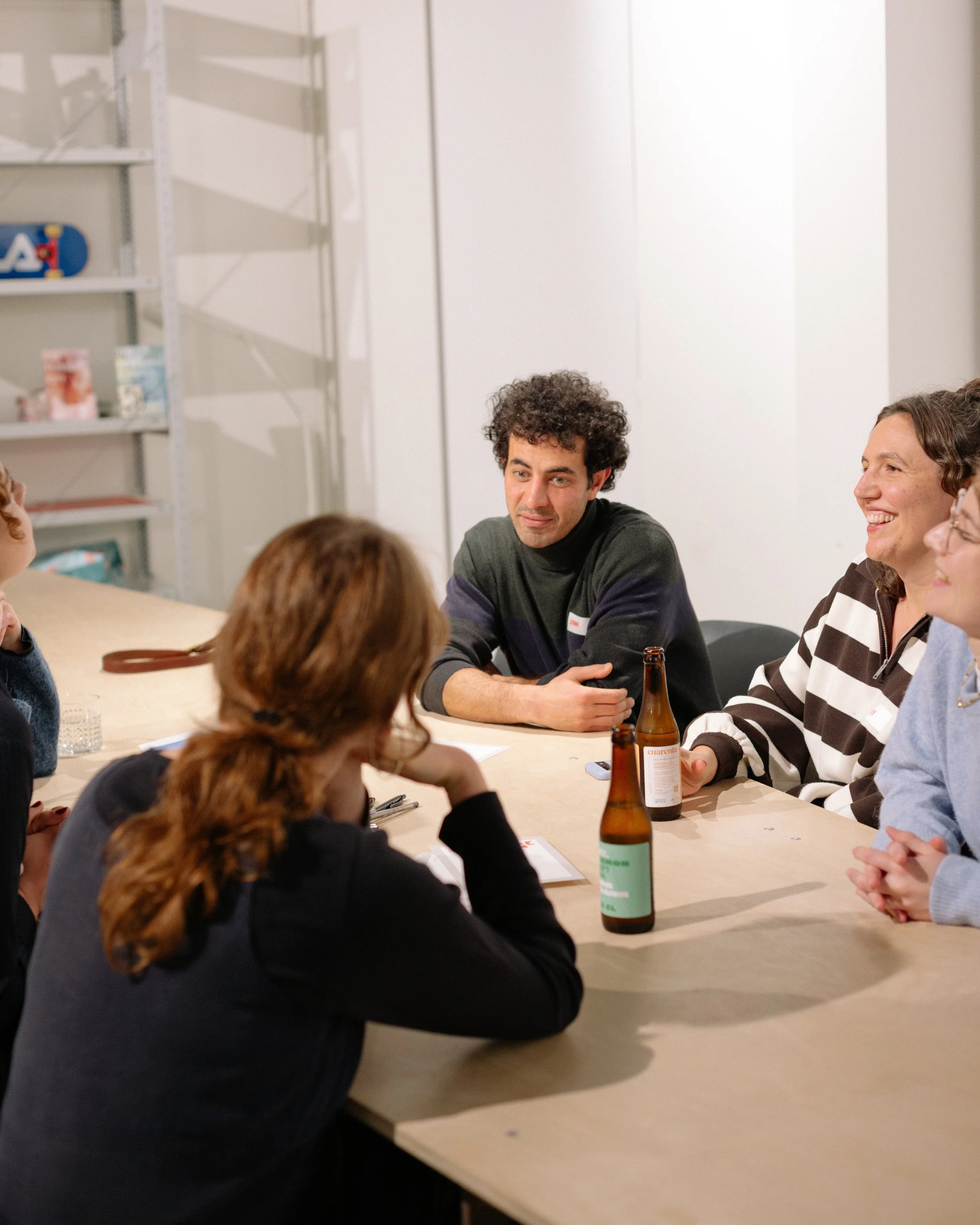
The curators and speakers exchanged ideas and even invited the public to participate after the panel discussion. Camille started by sharing her own personal experiences of gender inequality in legal academia, where she was early on surrounded by portraits and statues of old, white men. She realized how these statues don’t only immortalize white men, but always individual leaders, as if they made it entirely on their own. As if they didn’t stand on the shoulders of giants. Camille raises the question: what about community?
Who Gets Remembered? Rewriting Collective Memory
We continued the conversation with Camille Van Peteghem, who spoke about taking part in a commemoration event organized by Lean In Leuven Law that celebrated the 100th anniversary of female students in her faculty. One detail that stood out was her consistent use of the first-person plural “we”. Even after the event, when congratulating her on her powerful talk, she simply replied, “we did that,” emphasizing the collective effort.
For the commemoration project, Camille researched the faculty’s first female student, Germaine Cox. To honor her, the team of Lean In from the faculty worked on a mosaic of Germaine that also included all the female students and technical staff. The mosaic not only paid tribute to Germaine, but also to the generations of women who followed her, the ones who stood on the shoulders of female giants.
Some might argue that this is merely a symbolic gesture, but Camille highlights that symbolism matters. Statues, monuments, street names. They tell stories about what we deem important enough to remember. This raises key questions about how such decisions are made: Who is chosen to represent our shared history? How many women, people of color, and queer people are represented?
The issue is not only about numbers but also about the nature of representation. The statue of Molly Malone in Dublin, for example, illustrates how its accessibility to the public has come at a cost: her breasts have been touched so frequently by passersby that the bronze around her bosom has changed color.
In contrast, statues of white men are typically elevated on pedestals, often depicted on horseback. This is not accidental; the elevation symbolizes hierarchy and power. Moreover, while statues of white men tend to portray individual heroic figures, female statues are more often mythological or allegorical, such as the Statue of Liberty.
Once again, symbolism matters. Yet, Camille argues that when symbols become so familiar that we stop noticing them, they become dangerous. What we don’t see, we can’t resist. So, how do we resist? Analysis alone isn’t enough; we need to act. We need to rewrite these stories in a more inclusive way.
Reimagining Monuments in Practice
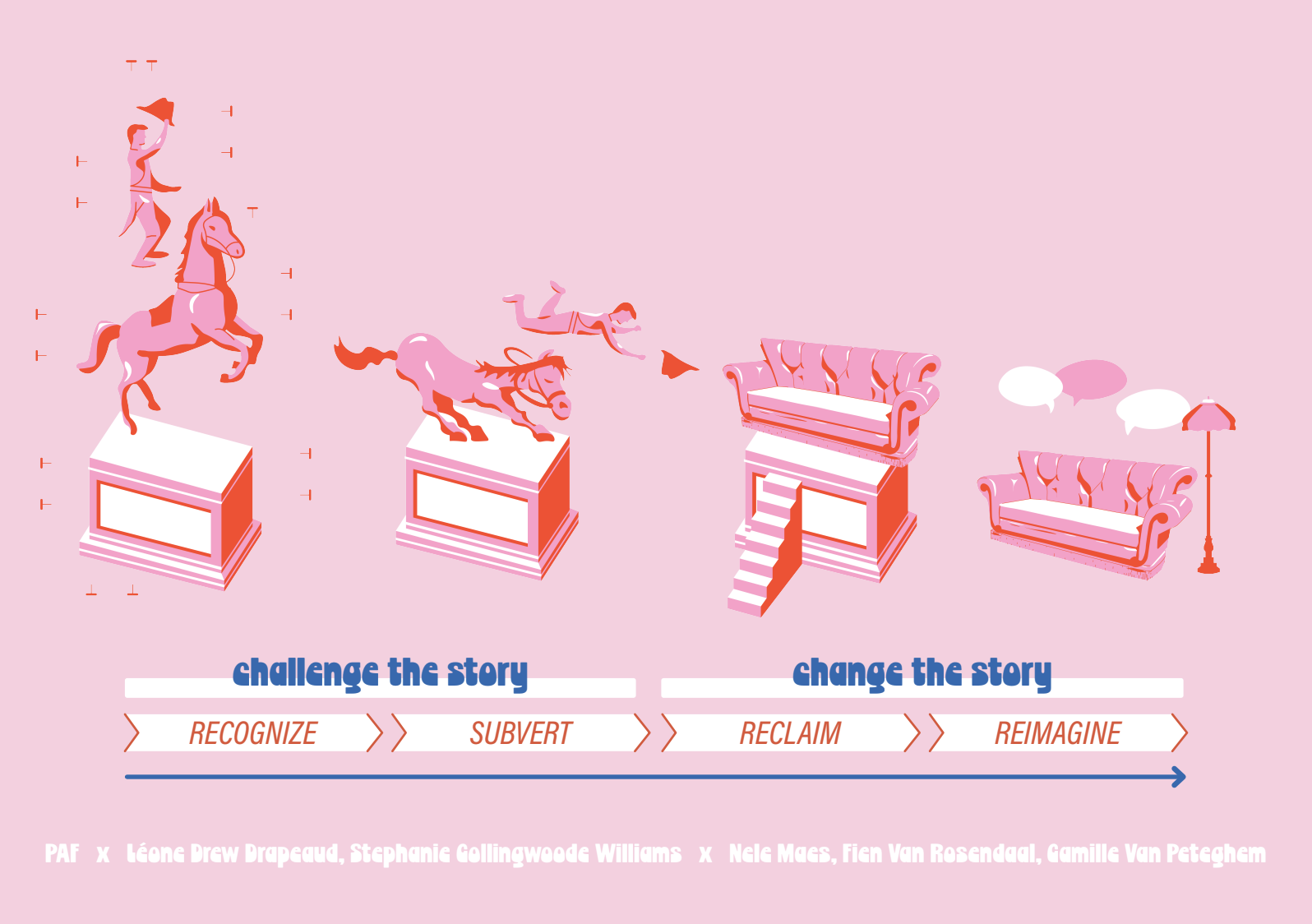
We then turn to Fien Van Rosendaal, who introduces a framework for the conversation, based on insights shared by Léone Drapeaud. The first part focuses on challenging the story by recognizing the issue: naming the problem, taking it apart, brick by brick. We dethrone the white men from their (high) horse. The second part is about changing the story. Here, we remove the pedestal and replace it with something new. We move away from fixed figures and create spaces for new, shared narratives.
So how does this work in practice? Stephanie Collingwoode Williams and Léone Drapeaud offer concrete examples of how their collectives rewrite these stories. As part of Traumnovelle, Léone worked on “The Grand Opening”, an installation that temporarily transformed a colonial monument. Rather than hiding or erasing the colonial past, the monument was reshaped into a space to be used for performances and discussions about the colonial past. Léone points out how removing the monument would also remove the narrative. And if we remove the narrative, we can’t question it.
Opening Space Through Friction
Stephanie argues that a colonial monument cannot simply be removed without first creating space for a meaningful public conversation about that removal. As an example, she refers to the wooden pedestal that SOKL, an initiative of Collectif Faire-part, put next to a statue of King Leopold II. By removing the king, they created a space that invited other stories: artists were encouraged to use the pedestal to tell their own. The project was participatory rather than fixed, in contrast to the permanence of traditional statues. Even the weather contributed to its impermanence; through rain and wind, the wooden pedestal continually changed.
Because the installation stood in public space, anyone could access and interact with it. Stephanie emphasizes that this accessibility also introduced risks: people who view the colonial past positively could just as easily participate. She argues that even spaces designed to be safe and inclusive can still lead to discomfort or harm, and that many people are not yet ready for difficult conversations or conflict.
Léone adds to this discussion introducing a 2018 Traumnovelle project for the Belgian Pavilion at the Biennale di Venezia. The installation created conflict and friction: doors were too low; steps were slightly too high. Despite this, children climbed the structure, and visitors even started dancing. For Léone, such moments show that when we remain open to conflict, we allow new forms of collective engagement to emerge.
Imagining New Forms of Collective Presence
Nele Maes brings us to the next question: What kinds of symbols do we still need? After addressing gender inequality and the colonial past in public spaces, Stephanie draws attention to economic inequality. Instead of symbols, she advocates for concrete action: less anti-homeless architecture, free public toilets, the use of empty buildings as shelters, bus stops that offer protection from the rain, and more third spaces where people can come together.
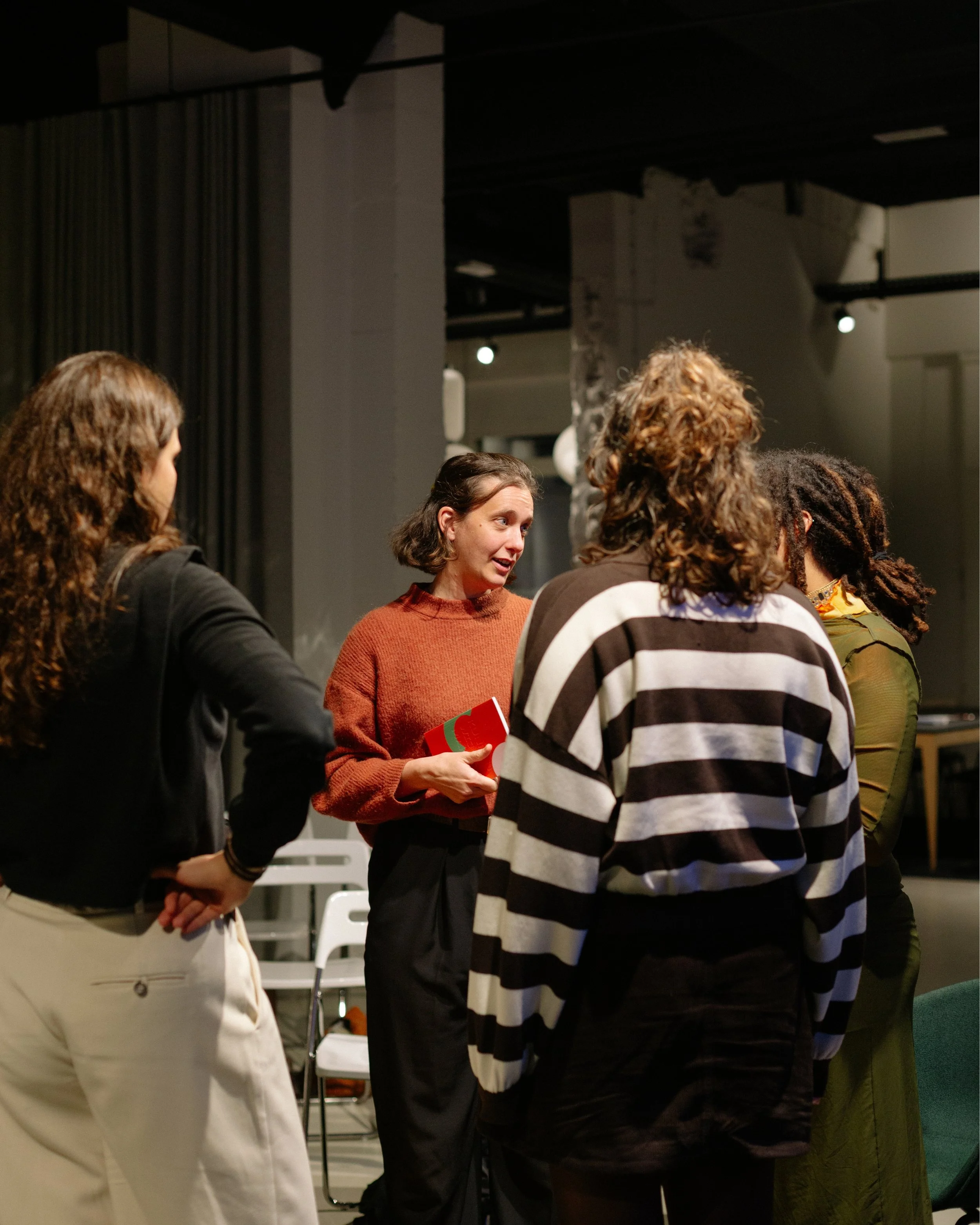
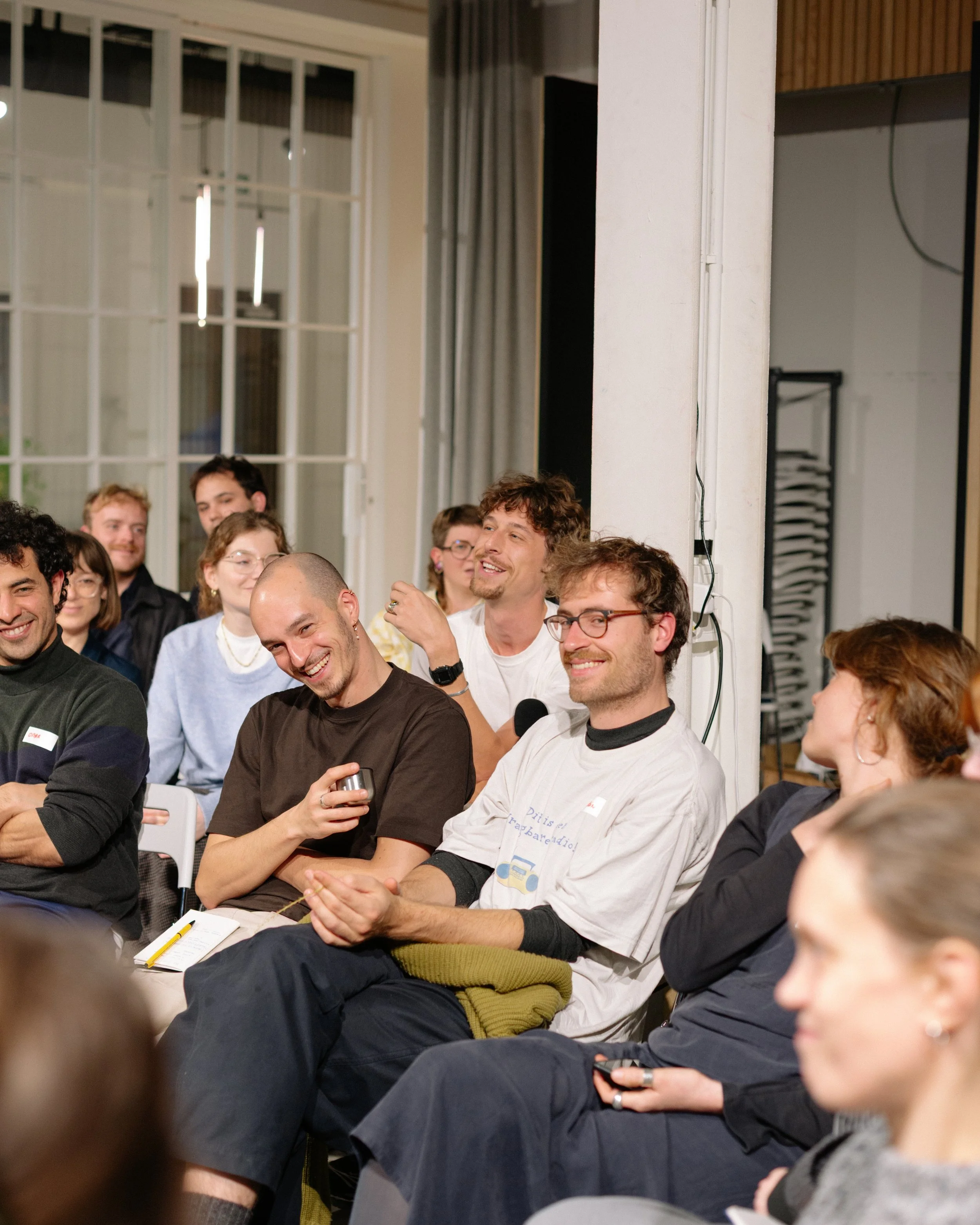
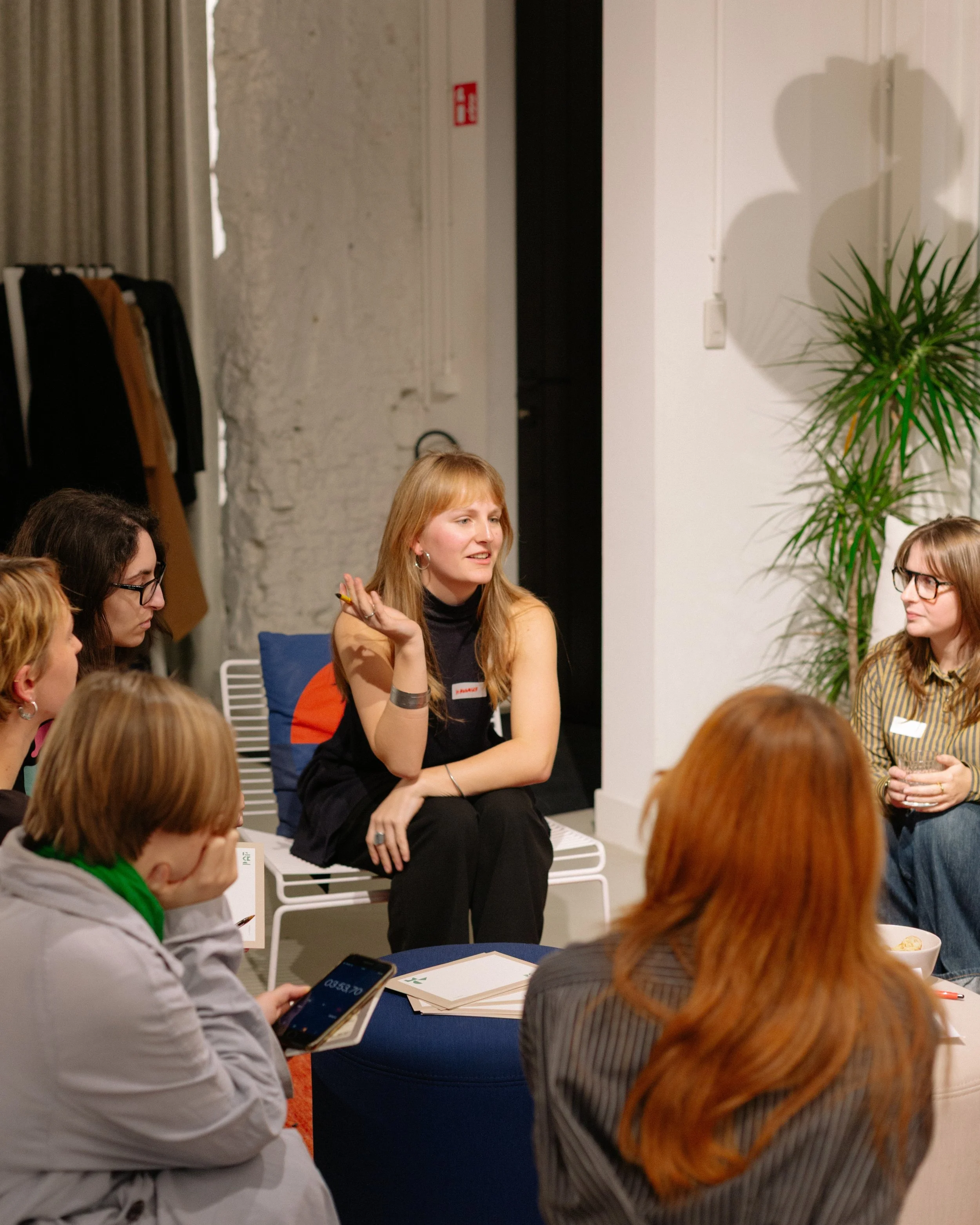
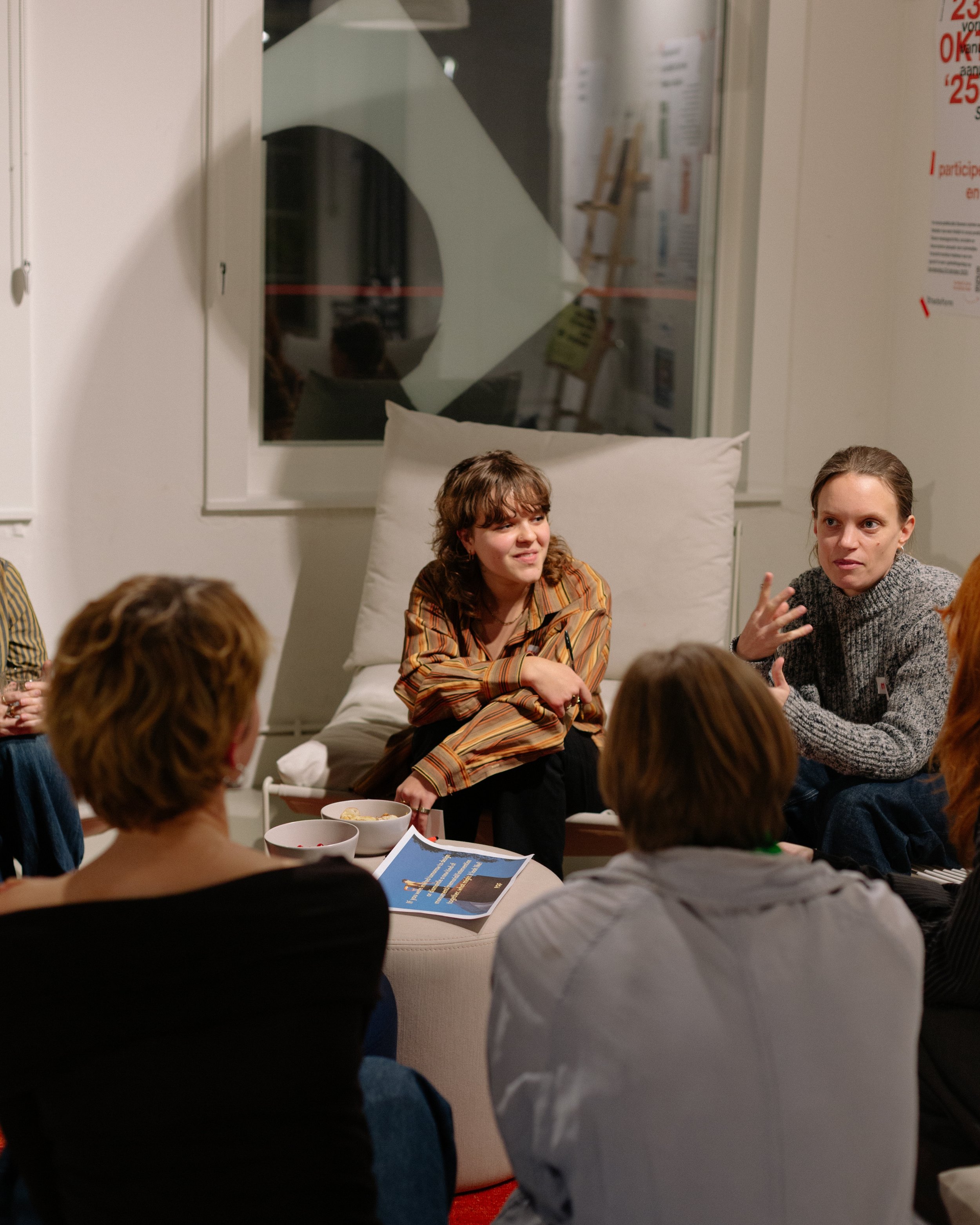
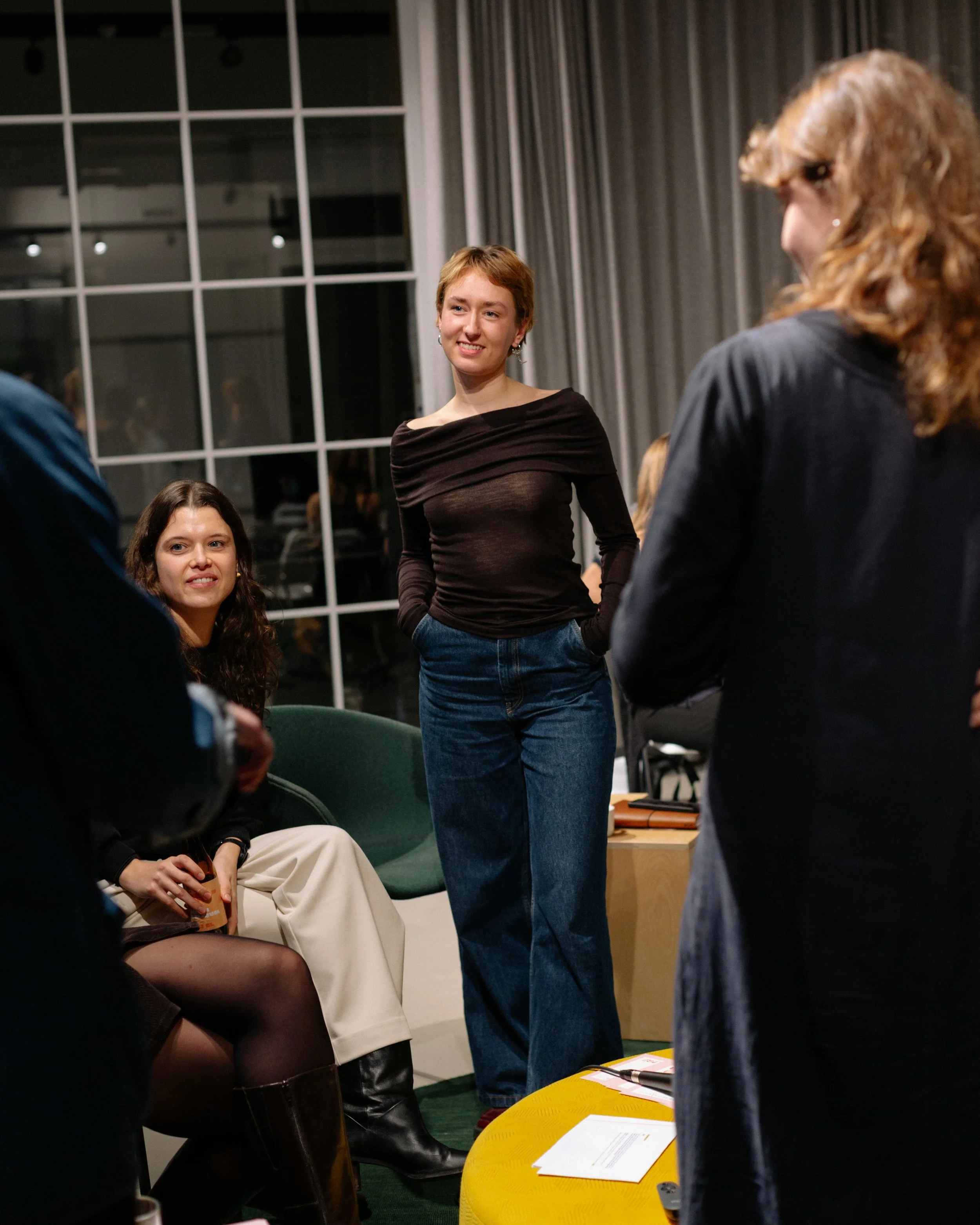
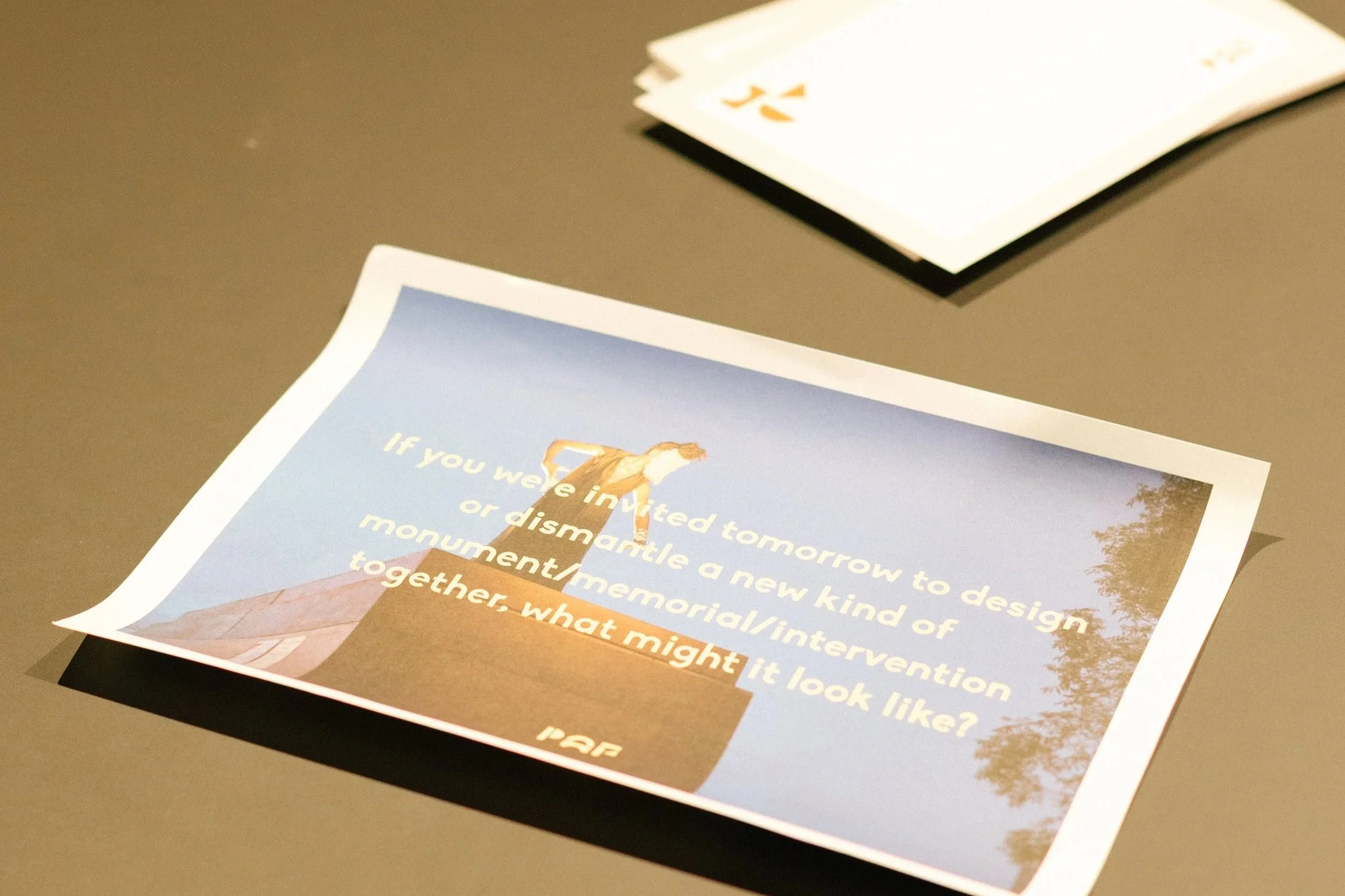
When the panel discussion comes to an end, Fien reminds the audience that public spaces are continually reshaped through dialogue and participation. She then invites everyone to engage through dialogue in smaller groups. We're all asked to reflect on the question: If you were invited to design a new kind of monument or memorial, what might it look like?
Someone mentioned the two-kilometer-long iftar table in Antwerp, a participatory initiative where people not only share food, but stories. Another person wondered whether trees and plants can give public space a new context. As an example, they talked about the statue of Leopold II in Halle, which became overgrown with ivy. “Let nature take over”, he explained.
What about you?
How would you imagine it?