Report: In conversation with Nani Jansen Reventlow about her book ‘Radical Justice’
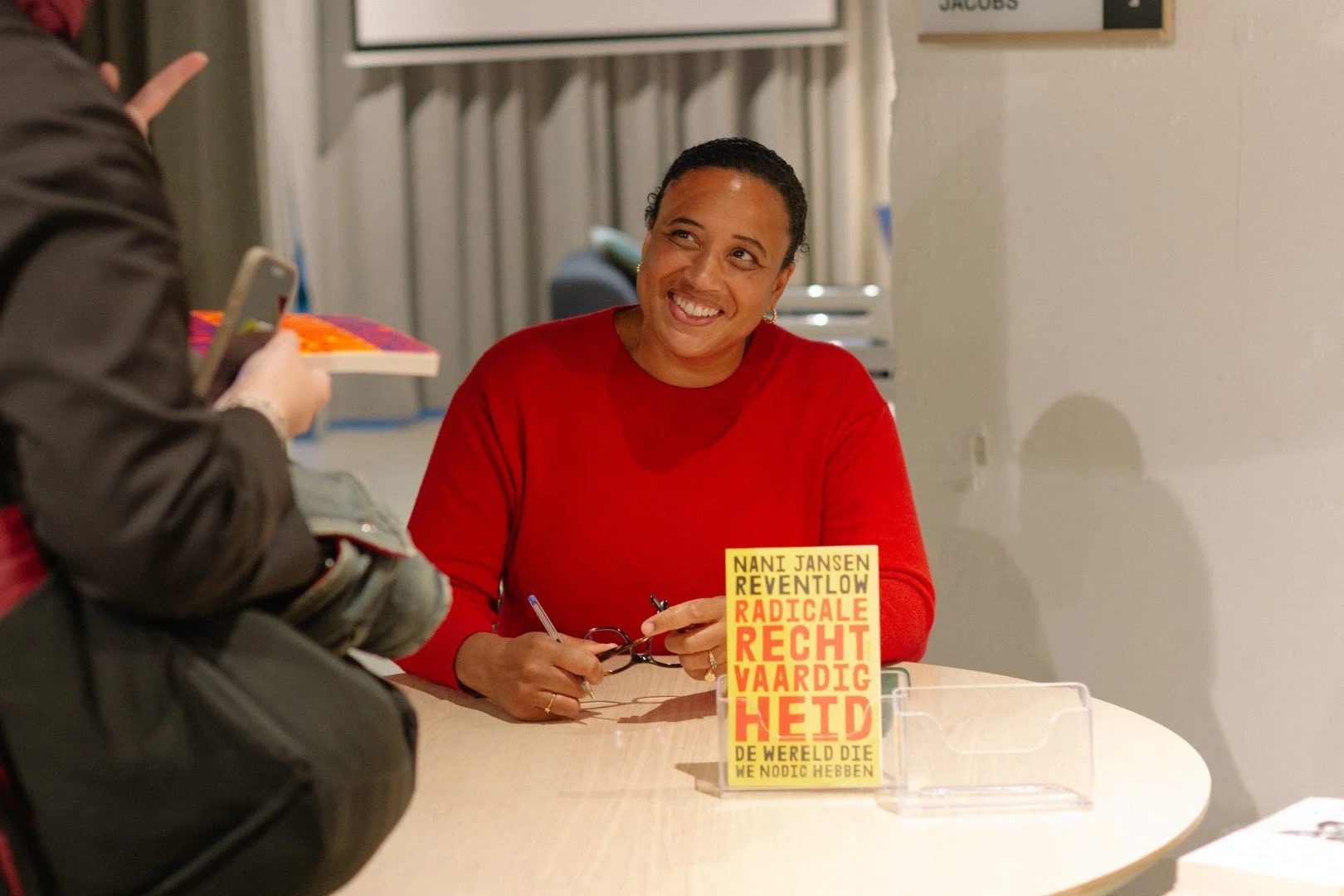
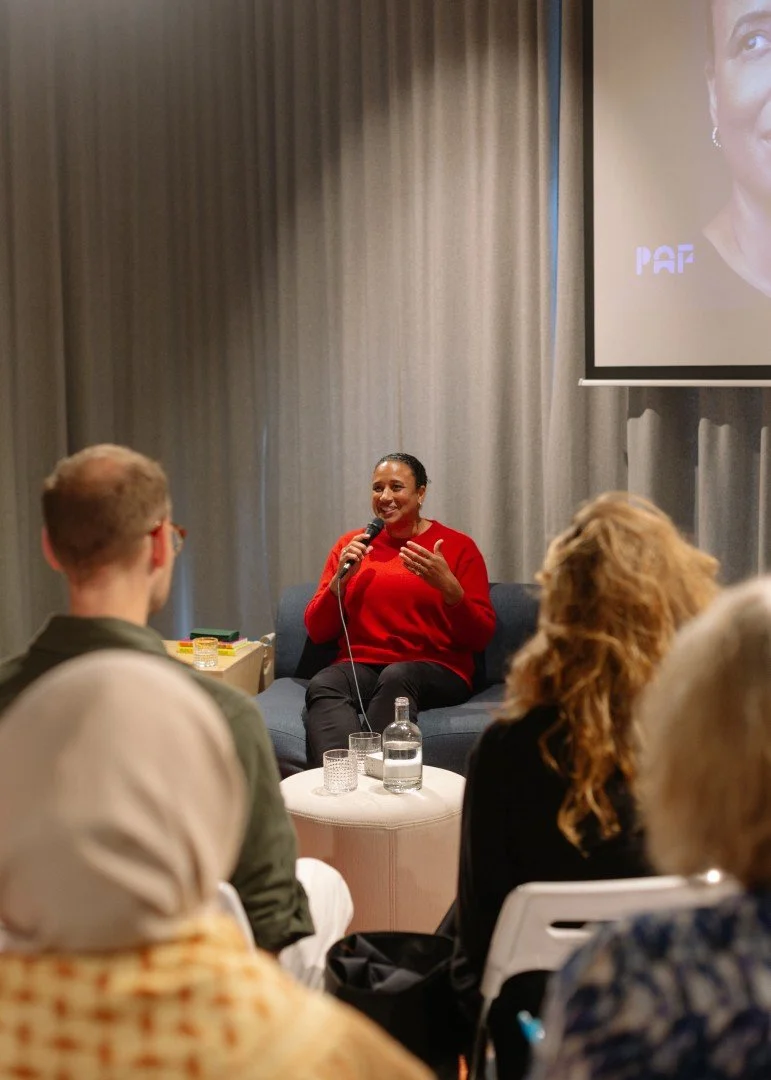
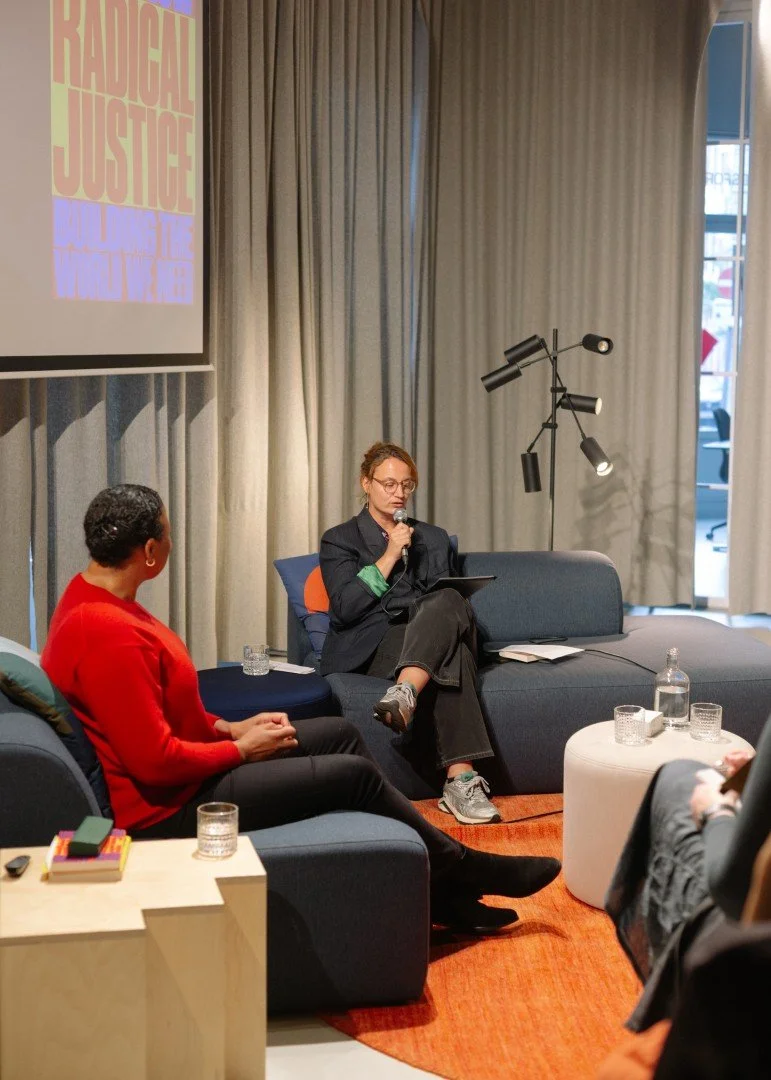
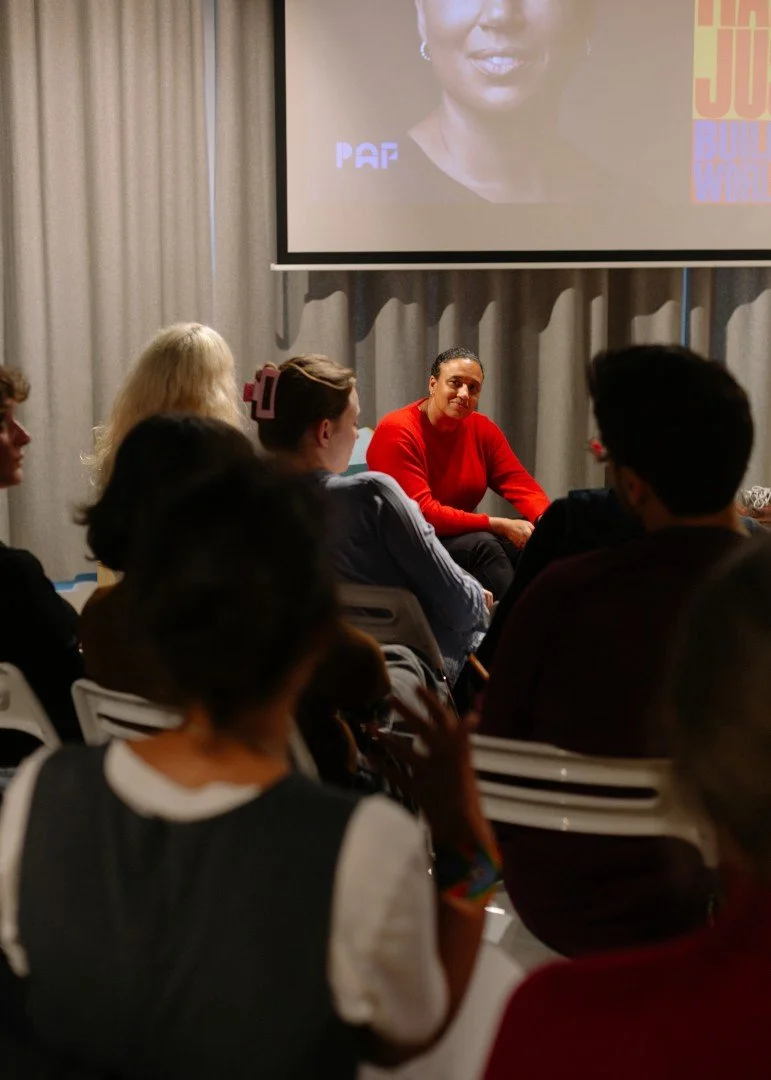
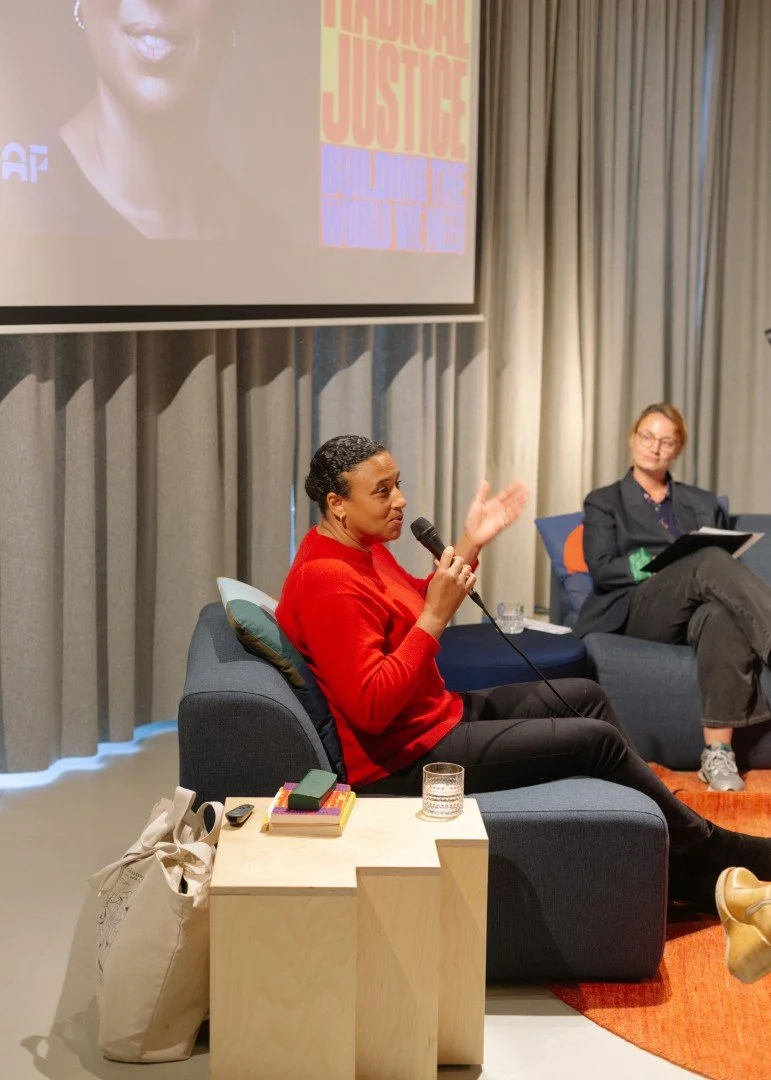
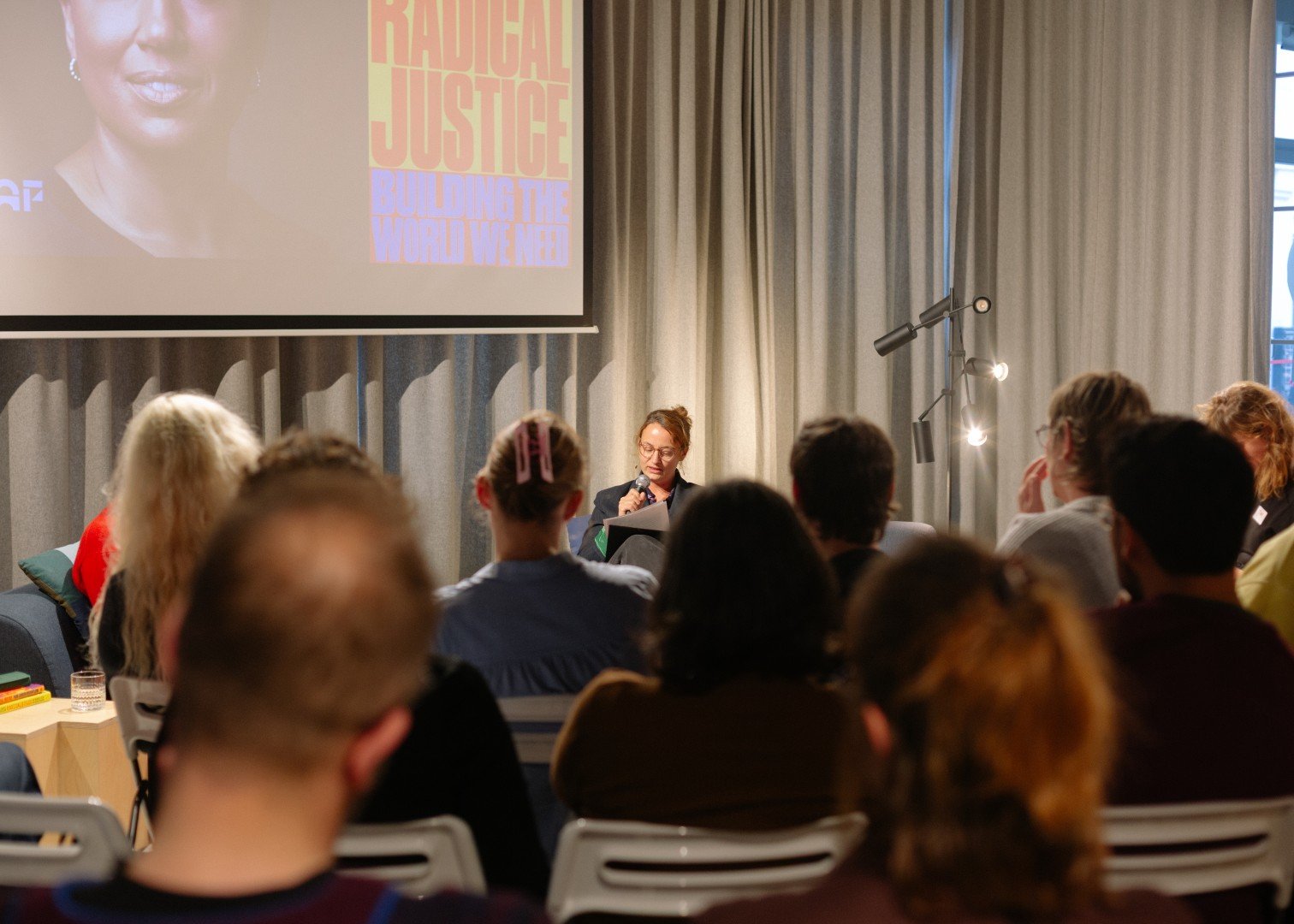
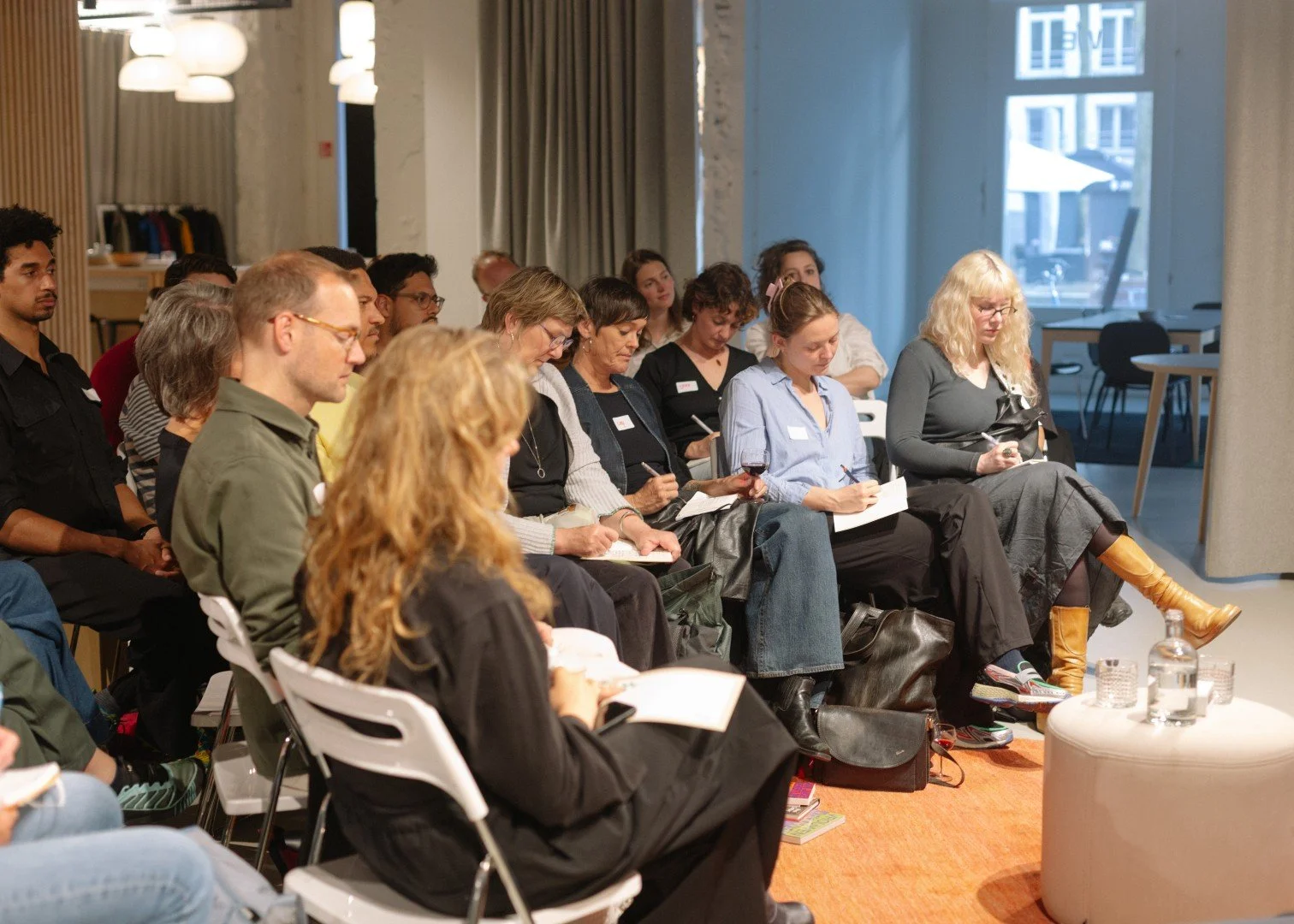
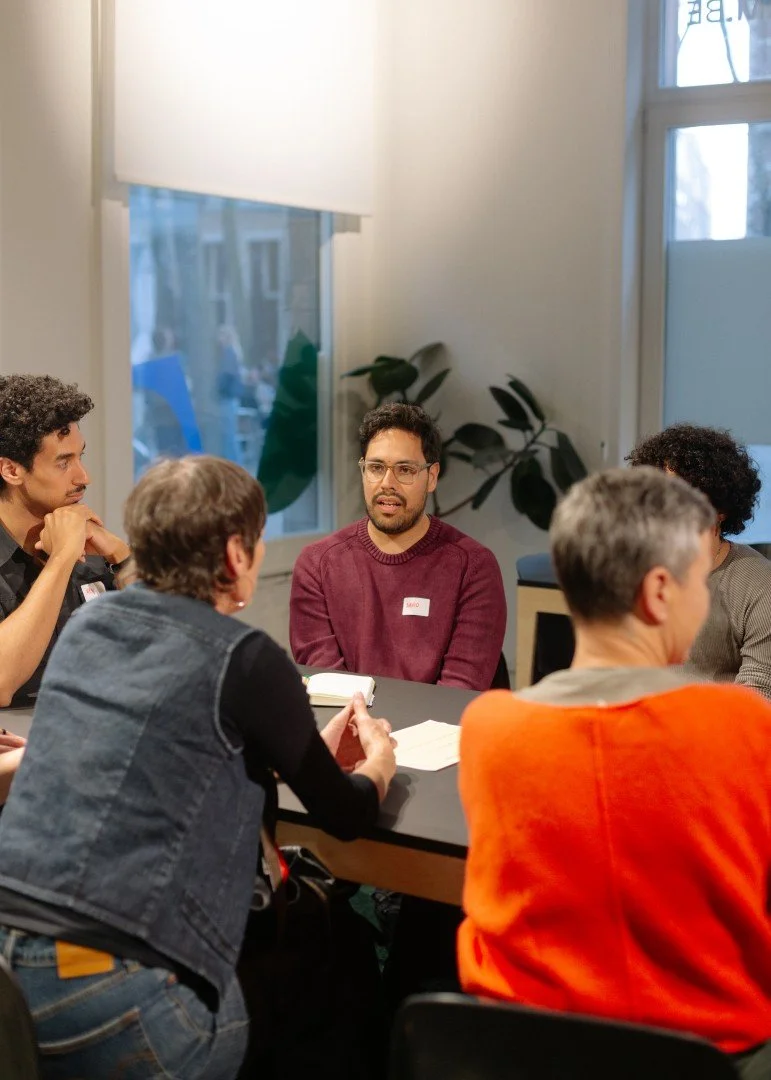
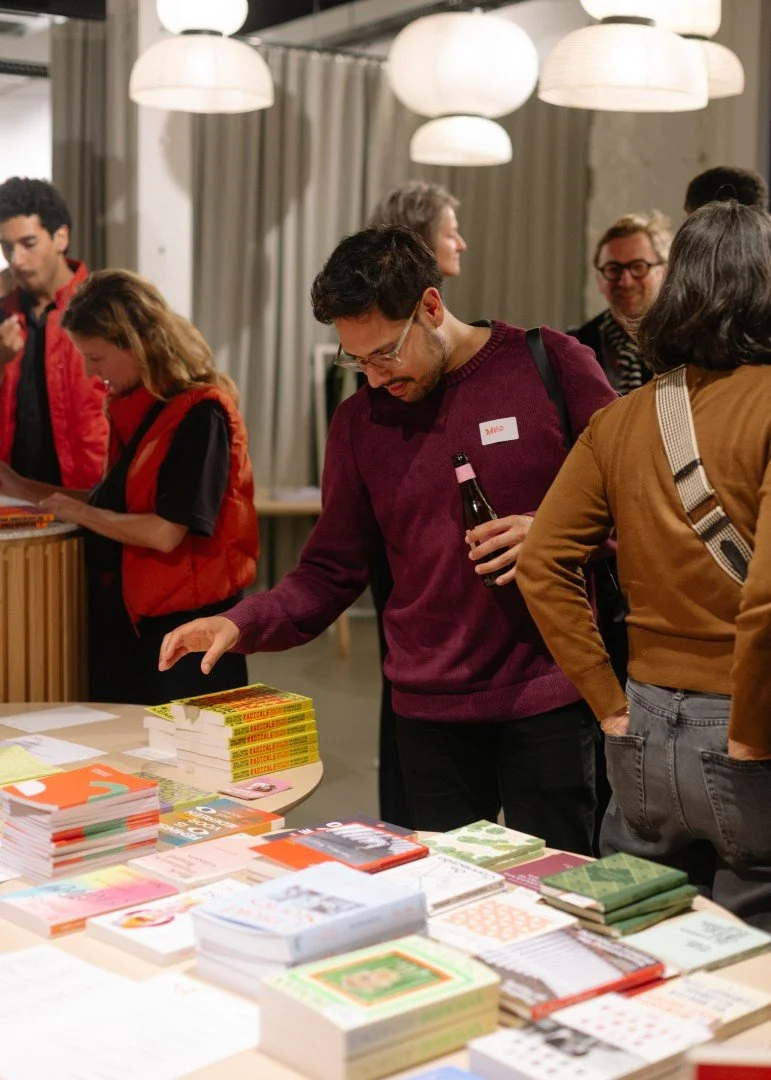
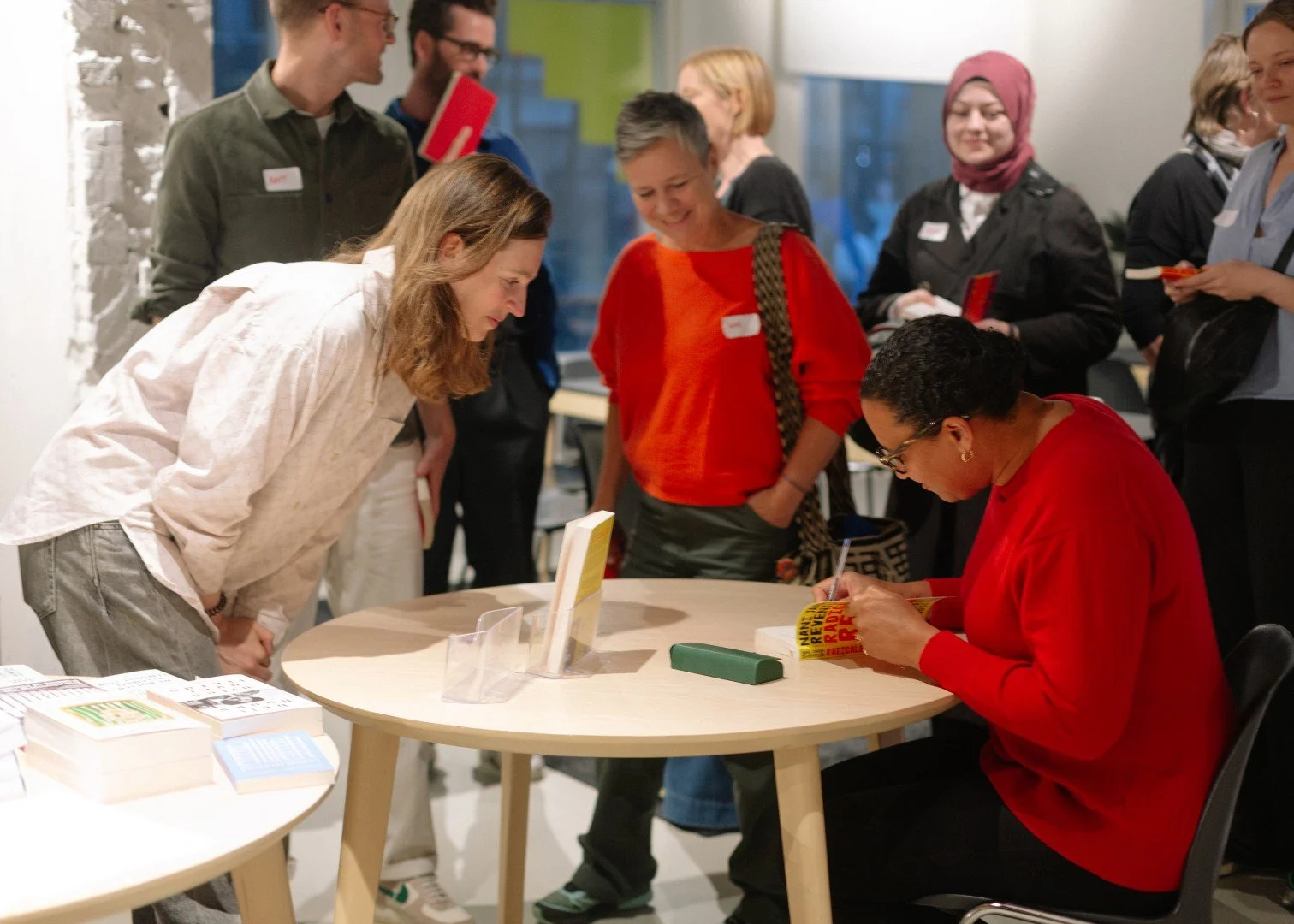
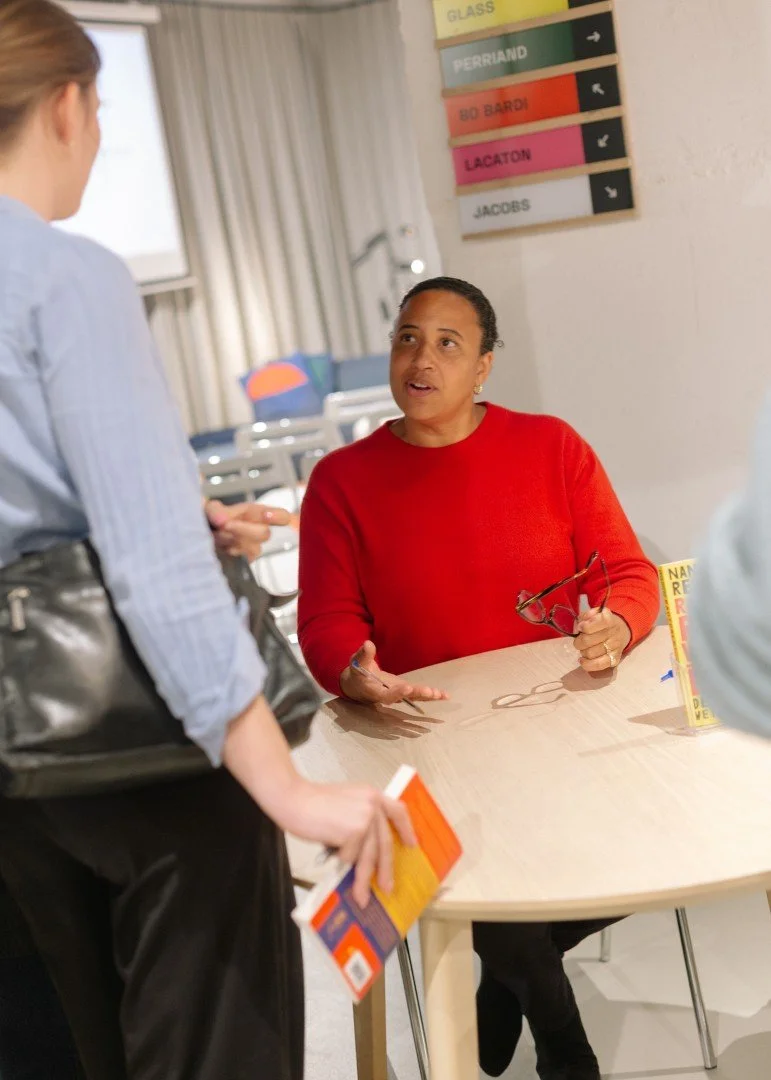
In her book Radical Justice (2026), human rights lawyer Nani Jansen Reventlow argues that each of us can contribute to systemic change. No matter how small, our everyday choices can help build a more just world. From this shared belief, PAF welcomed her on Thursday 4 June for a conversation moderated by Luce Beeckmans. Together with the speakers and the audience, we explored the book’s central themes, Jansen Reventlow’s work, and what these might mean for spatial practitioners. Both the book and the evening went beyond suggesting concrete actions: they also dismantled the systems that keep us passive. We were sent home with a renewed sense of agency, empowered to make intentional choices and take action to improve our (physical) environment.
Text: Vjera Sleutel
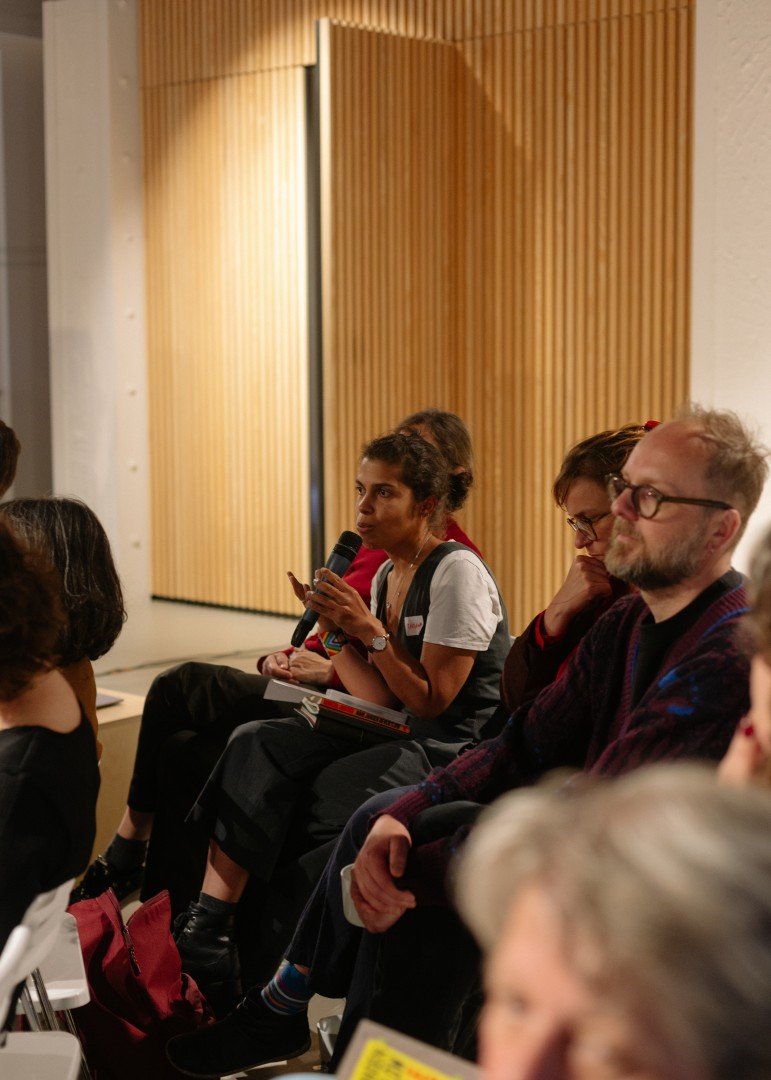
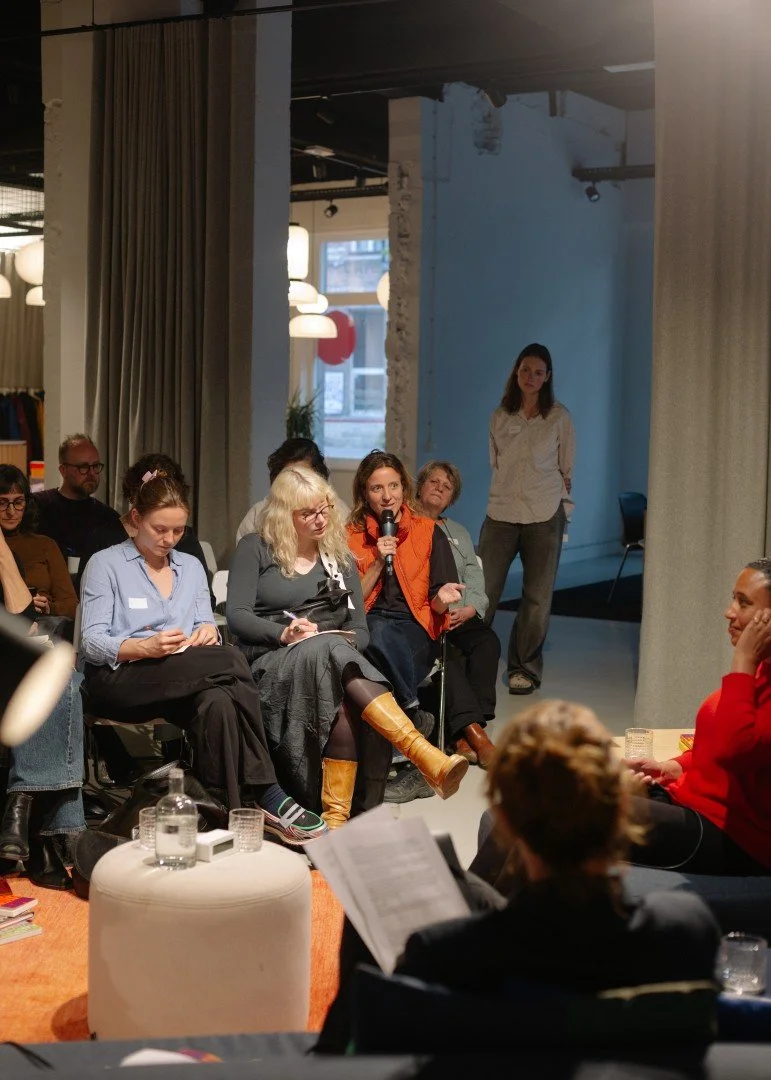
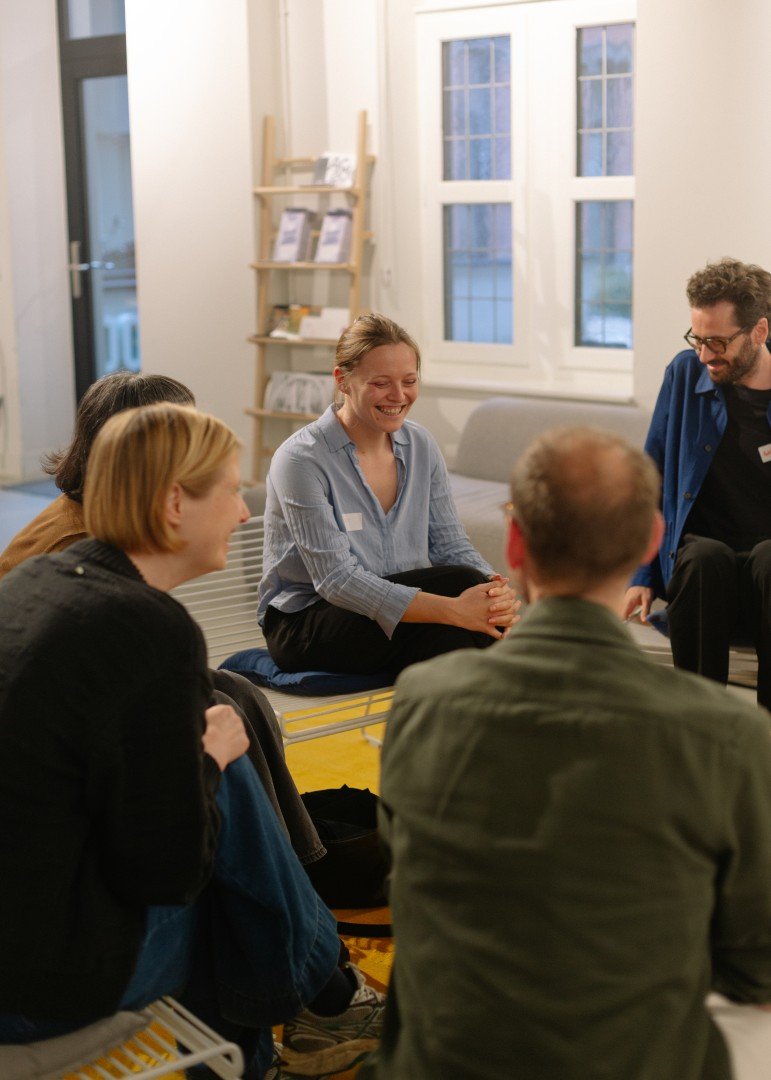
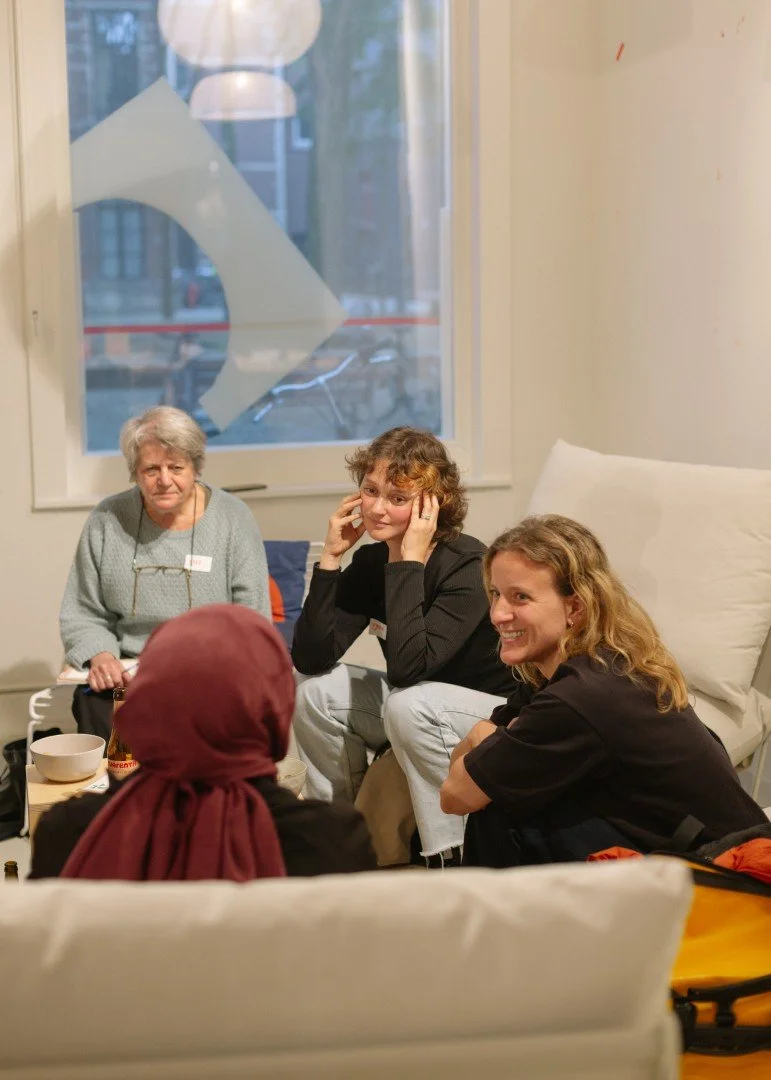
Photos: Tatjana Huong Henderieckx
Boldly addressing injustice at its roots
The title of the book, Radical Justice, pushes the reader to not just treat the symptoms of injustice. The term “radical,” Jansen Reventlow explained, is inspired by Angela Davis’ definition of radicalism as “grasping things by the root.” Throughout the book, she examines the structural causes of the systemic injustices that we’re seeing in the world today and how they are intertwined. “We live in a world where things get oversimplified,” Jansen Reventlow expresses. In order to avoid cosmetic solutions or superficial fixes it is essential to properly understand what the root cause is of what we are resisting.
Being radical is also remaining bold and big in our vision for change. Jansen Reventlow continues with the example of the “polder model” – a Dutch term referring to a culture of consensus in which confrontation is deliberately avoided. This politics of compromise has allowed progressive ambitions to be watered down and gradually shifted our political conversations further and further towards the right. “We don’t have to wait for everyone to agree to start working on our radical vision for change,” she underlines. There is space for convincing people, particularly the silent majority in the middle, but we don’t have to invest in debating with everyone. That energy can better be used to actually try to change things. When someone in the public addresses concerns about polarisation Jansen Reventlow notes that it is important to remember that despite political division we as humans share the same concerns. We all want our family and friends to be healthy, to have a good home, etc. When we talk about change, it is key to start from this common ground.
We don’t have to wait for everyone to agree to start working on our radical vision for change.
A tapestry of activism without heroes
But how do we get to the acting? Fundamentally changing the systems we live in at their core can feel overwhelming. To avoid that readers get demotivated Jansen Reventlow uses the image of a tapestry of activism. We’re all part of different ecosystems where we have different levels of power: workplaces, neighbourhoods, families, … In each of these spaces we have opportunities to act, however modest those actions may seem. “These small actions matter”, she emphasizes. History shows that significant social transformations emerge through a constellation of many people using different tactics and forms of engagement. Because it is impossible to predict which act made change possible, every contribution matters. Working each from our own strengths and interests can eventually lead to meaningful long-term change.
History shows that significant social transformations emerge through a constellation of many people using different tactics and forms of engagement. Because it is impossible to predict which act made change possible, every contribution matters.
Although we have to activate our agency as individuals, Jansen Reventlow notes that social transformation is never the result of the effort of one single person. She critiques the familiar narrative of the hero’s journey – where a hero overcomes obstacles, rises up, and leads us all towards salvation. Such stories, she argued, are problematic on three levels. First, they obscure the collective labour behind every social movement, overlooking the many essential but often invisible forms of labour – from organising the spreadsheets to making the cups of tea. Second, it erases the long-standing contributions of Black women, Indigenous women, and women of colour, who rarely fit the image of the hero – an image that is too often white and male. Finally, it diminishes our sense of ownership and agency. When change is portrayed as the achievement of distant, exceptional figures, many people feel they themselves have little role to play. Rejecting the hero’s journey is necessary to empower broader participation. Beeckmans rightfully notes that architecture suffers from a similar problem, with the figure of the white male architect still dominating ideas about who designs the world.

The traces of colonialism and political courage
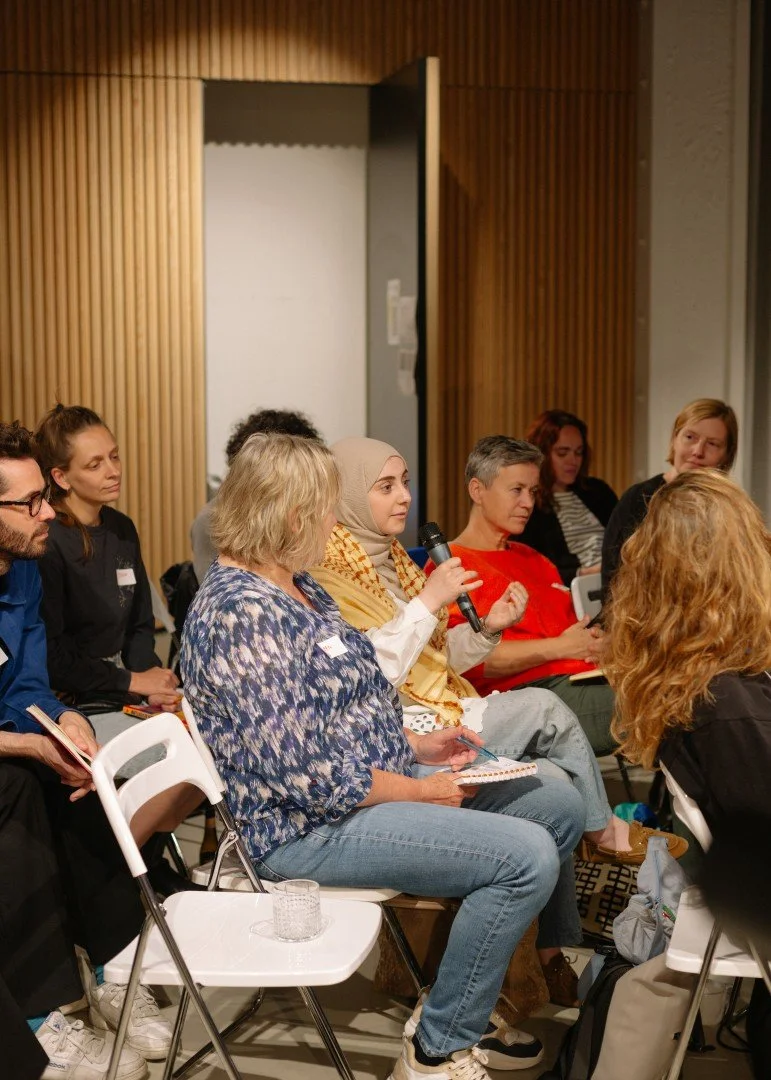
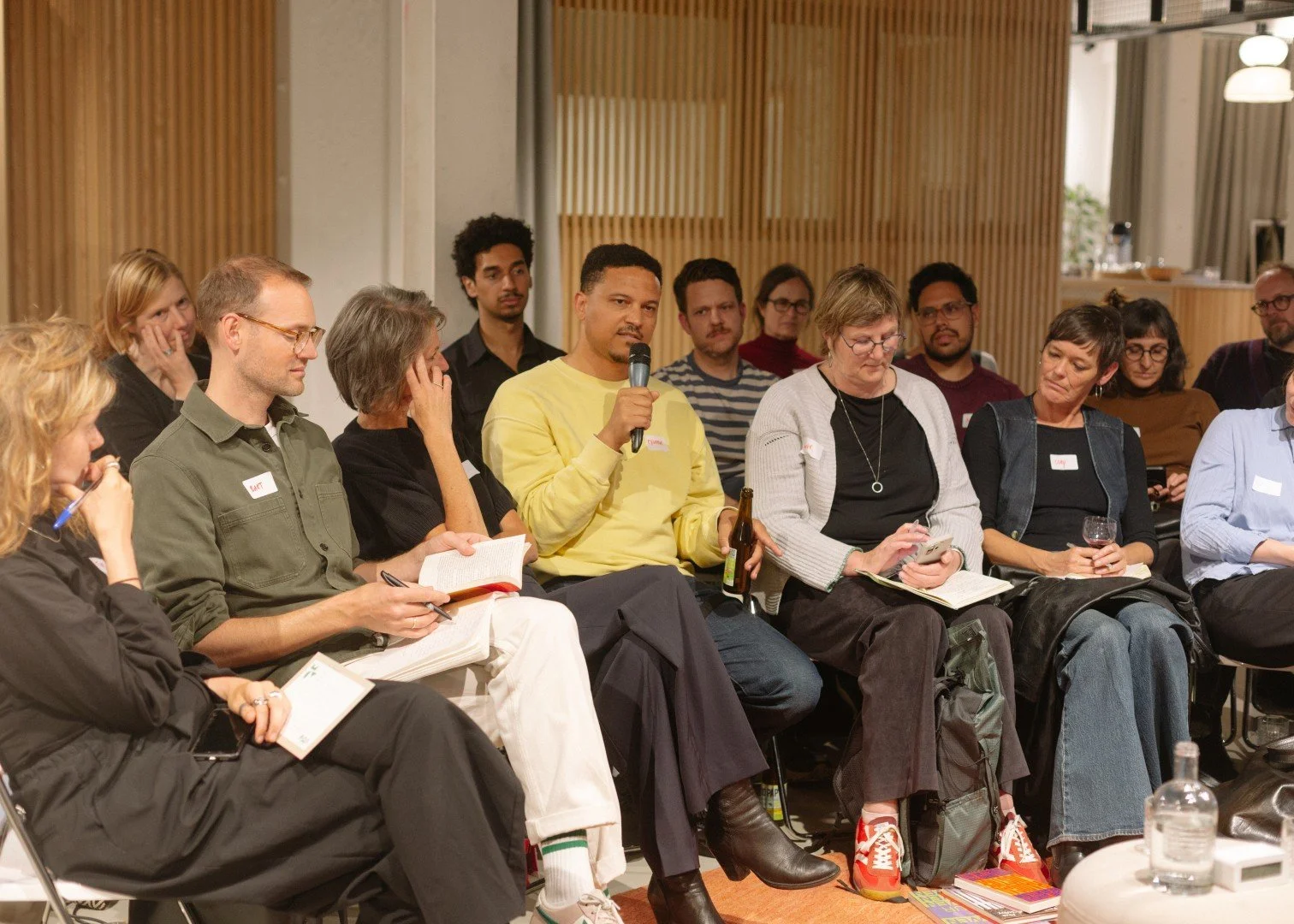
A recurring theme throughout the conversation is the importance of understanding injustice as interconnected rather than isolated. Jansen Reventlow argues that racial injustice, economic exploitation and the climate crisis share roots in colonialism and slave trade. These histories continue to shape today's inequalities through ongoing extraction and the unequal distribution of environmental and economic burden of our capitalist mass production. Beeckmans points to the Africa Museum as a local example of how our colonial history is embodied in our built environment. Jansen Reventlow adds that a lot of the buildings financed by colonial money remain invisible as such: our palaces, our municipal halls et cetera. During the group conversation with the audience, a participant expanded this reflection by noting that colonialism in architecture is also embedded in architectural education itself. Arguing that what we see as ‘good’ architecture comes from a very narrow, colonial framework.
Addressing these legacies, Jansen Reventlow stressed the need for political courage and concrete measures. Too often, she noted, discussions about compensation for colonialism and slavery are dismissed as unrealistic. Yet history provides countless examples of governments compensating slave owners rather than those enslaved and their descendants. Many of these payments still have effect until quite recently. While reparations are not solely about financial compensation, economic compensation remains an important component. Particularly given that we in this part of the world are benefitting from this still until this very day, and the reverse is the case for those territories that we've been extracting from. The same principle applies to representation. Rather than relying on gradual progress, Jansen Reventlow argues for hard quotas as a tool to achieve diverse representation.

Different futures in and beyond the workplace
Imagining a different future can be difficult, Jansen Reventlow expresses, but is essential. Justice movements must not only resist existing systems but also envision alternative futures. Beeckmans suggested that architecture could play an important role in making alternative worlds visible. At the same time, both speakers acknowledged that architecture is deeply entangled with existing power structures. “Should we be more critical on which assignments to take on?” Beeckmans asks. “Yes, of course,” Jansen Reventlow answers, “but people do need to pay their bills”. What matters is recognising the choices available to us at every stage of our work.” Every day, there are countless opportunities to shape the process and influence the outcome.
We’ve all been brainwashed into certain systems. We all need to continuously learn, unlearn, and challenge ourselves, and that is hard work.
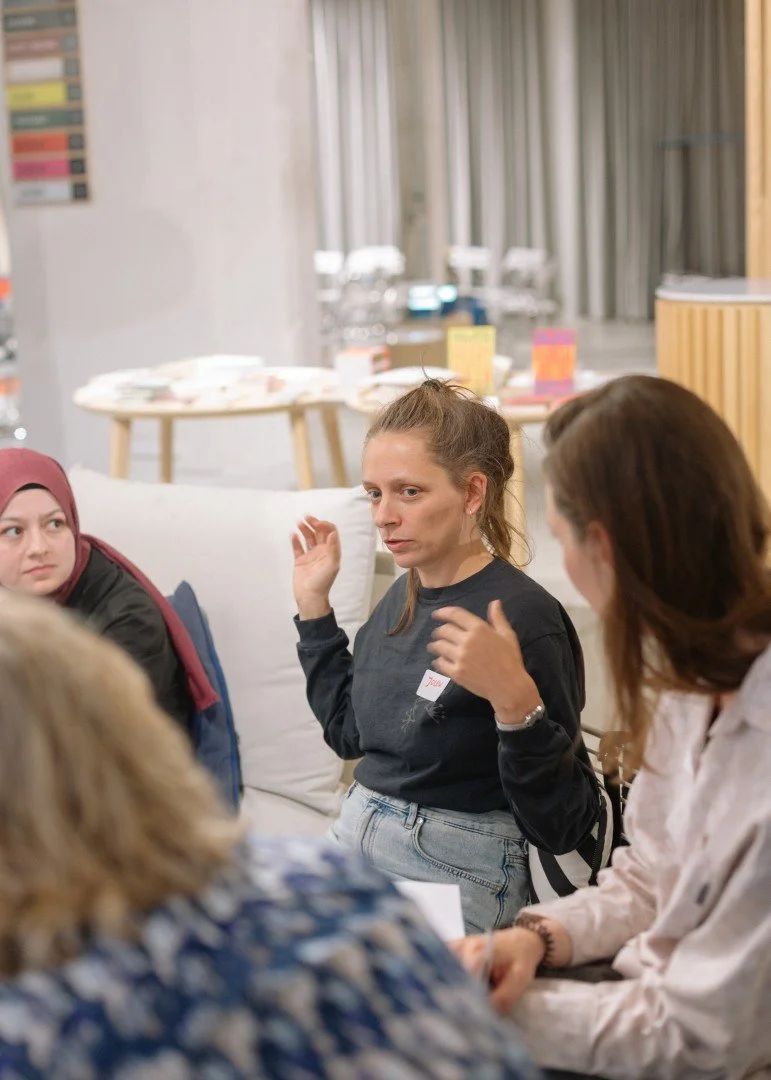
Yet imagining different futures requires more than shared values such as anti-oppression, intersectionality, and justice, as Jansen Reventlow learned from her work with Systemic Justice. These principles alone are not enough: living them means continuous internal work. “We’ve all been brainwashed into certain systems. We all need to continuously learn, unlearn, and challenge ourselves, and that is hard work.” We cannot expect to work on these issues without them showing up within our own context. Organisations must continually examine what these values mean in practice and develop concrete structures to support them. When asked by an audience member how this is translated into organisational practice, Jansen Reventlow shared the very concrete measures they took at Systemic Justice as an example: a clear three-pager reducing ambiguity, a detailed procedure outlining steps to follow in case of disagreement, the formulation of explicit competencies and expectations within recruitment processes, and ensuring access to resources and support for developing any missing skills.

Radical justice in spatial practice
More than offering a checklist of to do’s to contribute to a more just world, Radical Justice invites us to fundamentally rethink how change happens. For spatial practitioners, this means questioning not only the projects we work on, but also the institutions, educational frameworks, and professional cultures that shape our practice. It also means letting go of the myth of the solitary genius and recognising that meaningful change is always collective.
The challenge is not to wait for the perfect project or unanimous consensus, but to recognise the opportunities for transformation embedded in everyday practice.
This means appreciating the work of construction workers, modelmakers and office associates equally. The challenge is not to wait for the perfect project or unanimous consensus, but to recognise the opportunities for transformation embedded in everyday practice. Believing that our own contribution matters is, as I learned from this evening, where radical justice begins.



* Transcription, language editing, and editorial assistance were supported by OpenAI.