
Report: Feminist Housing with Angela.D
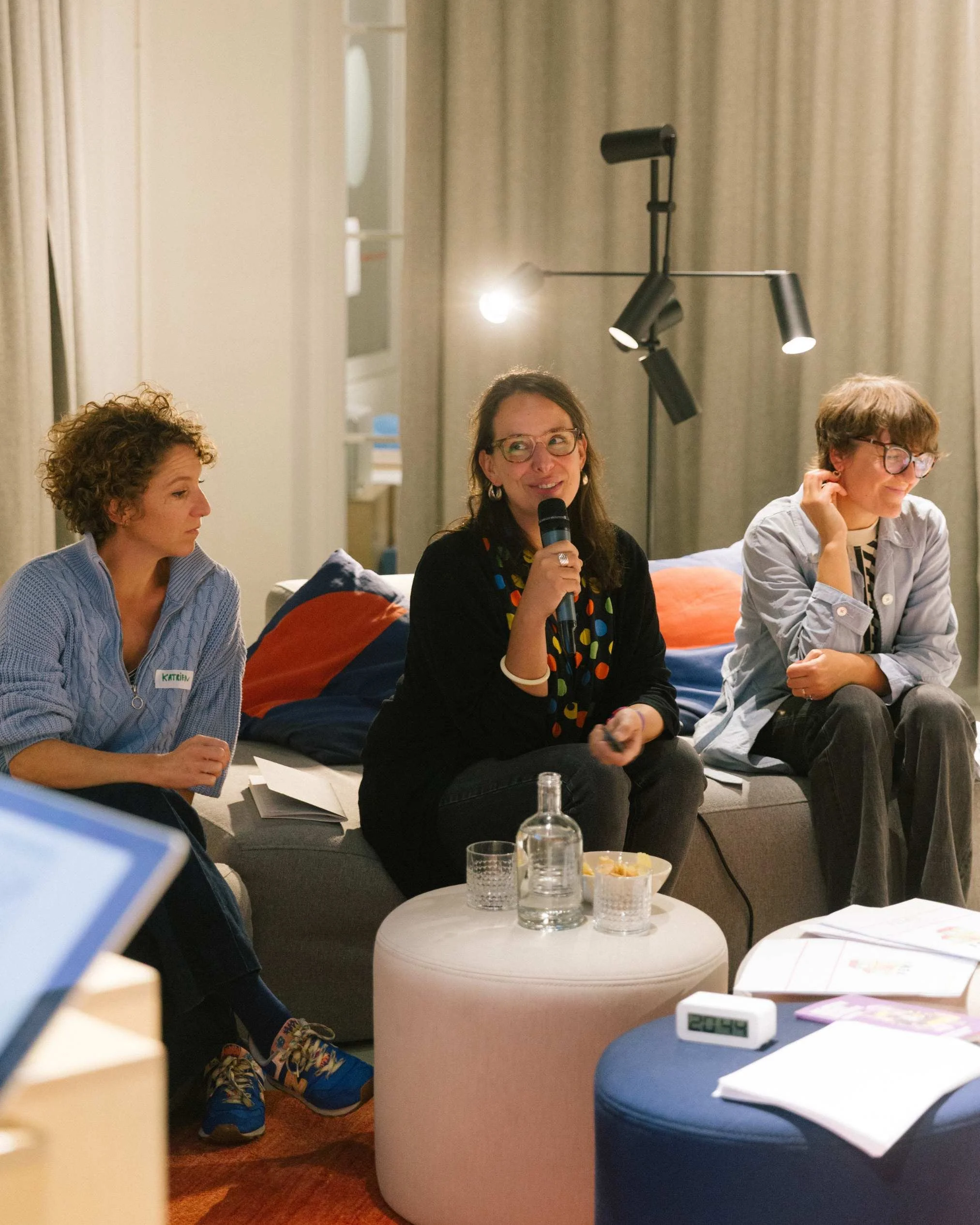
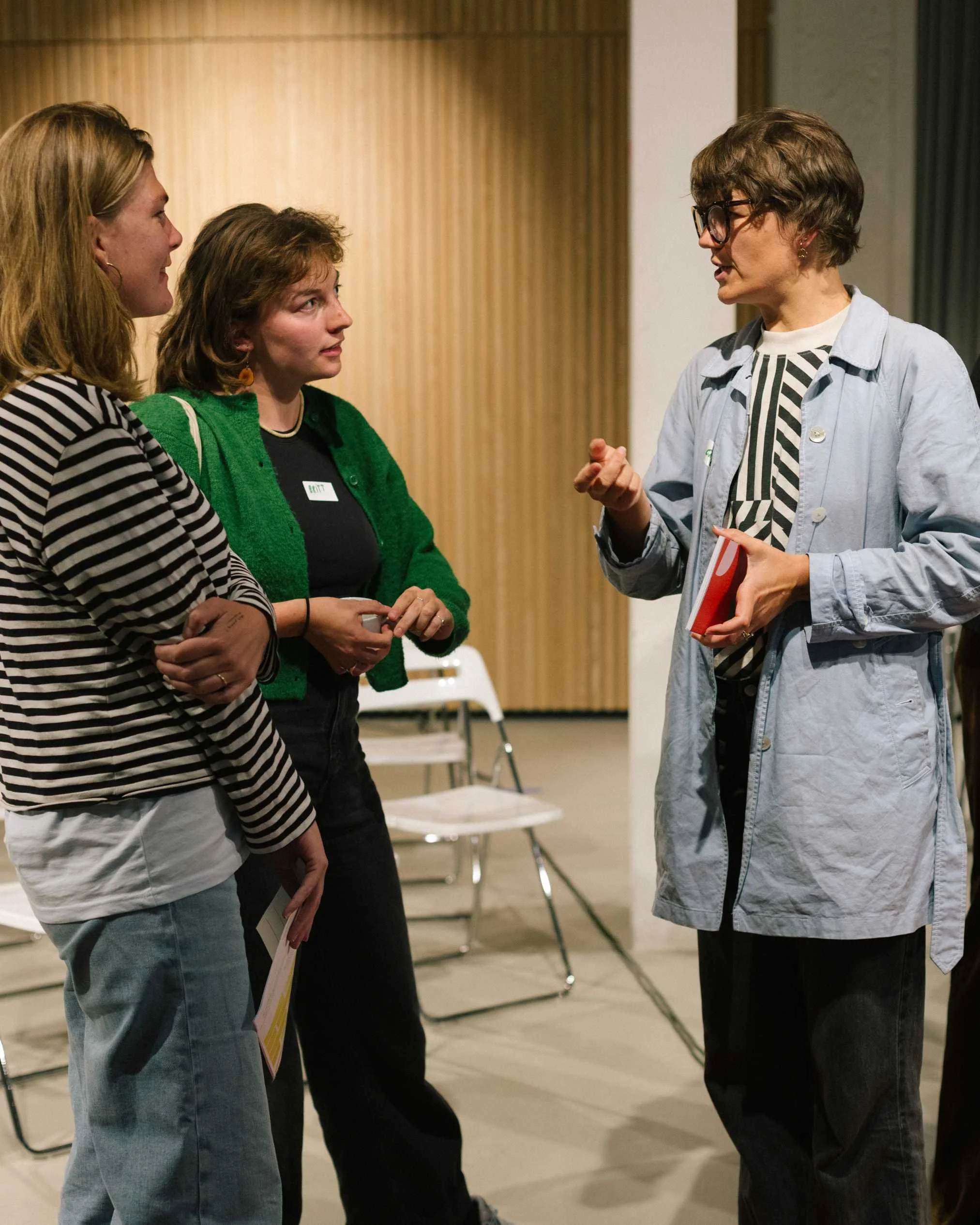
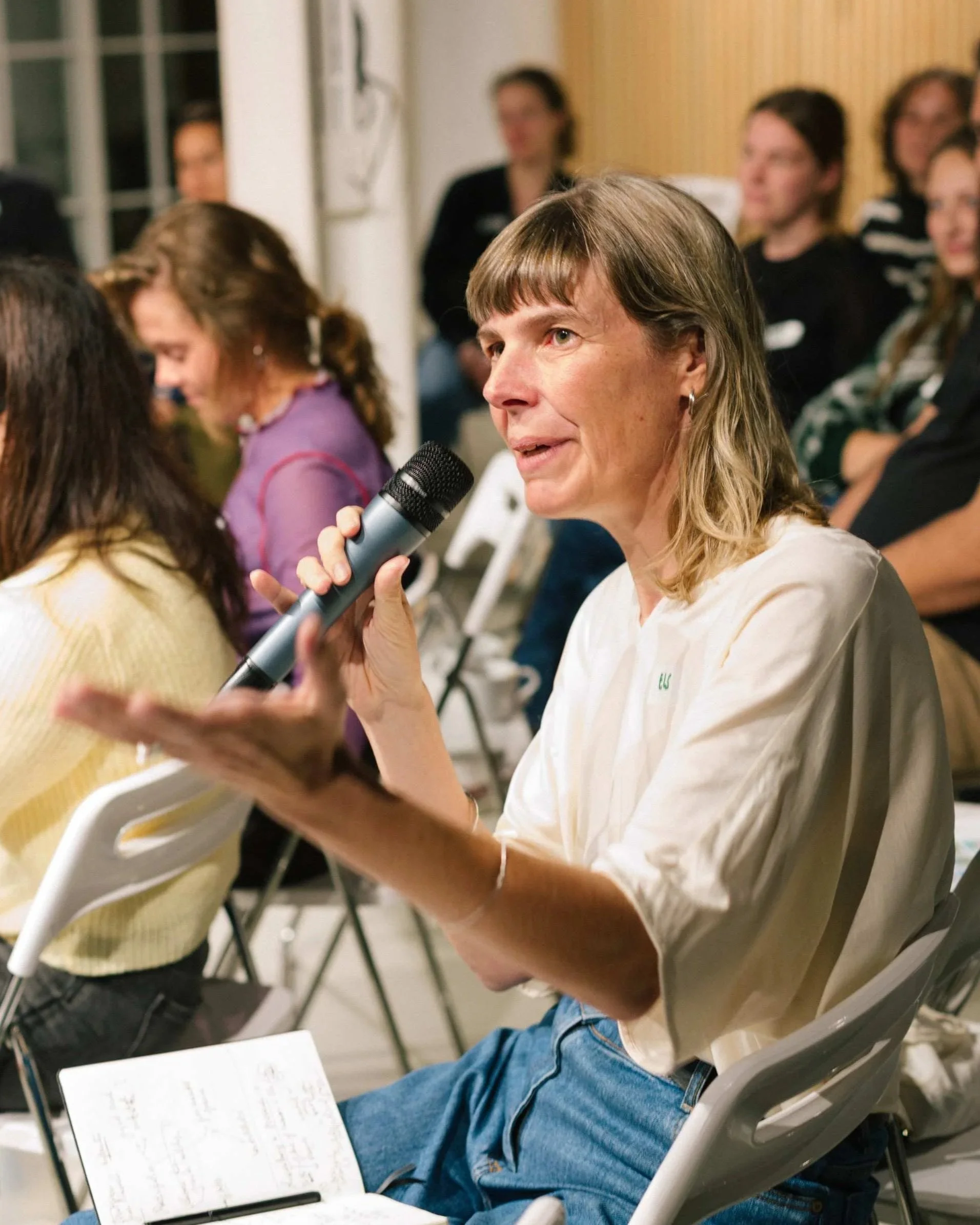
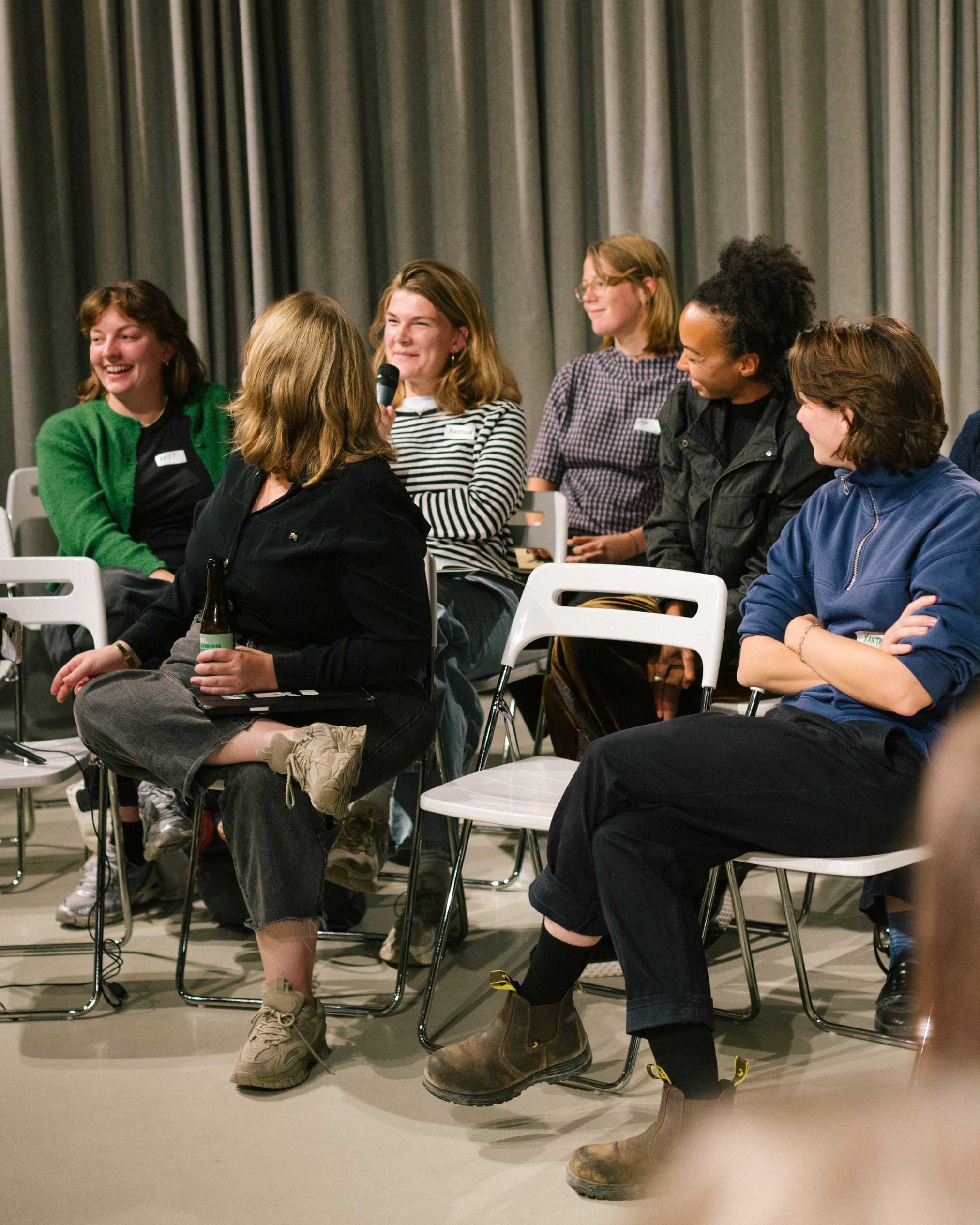
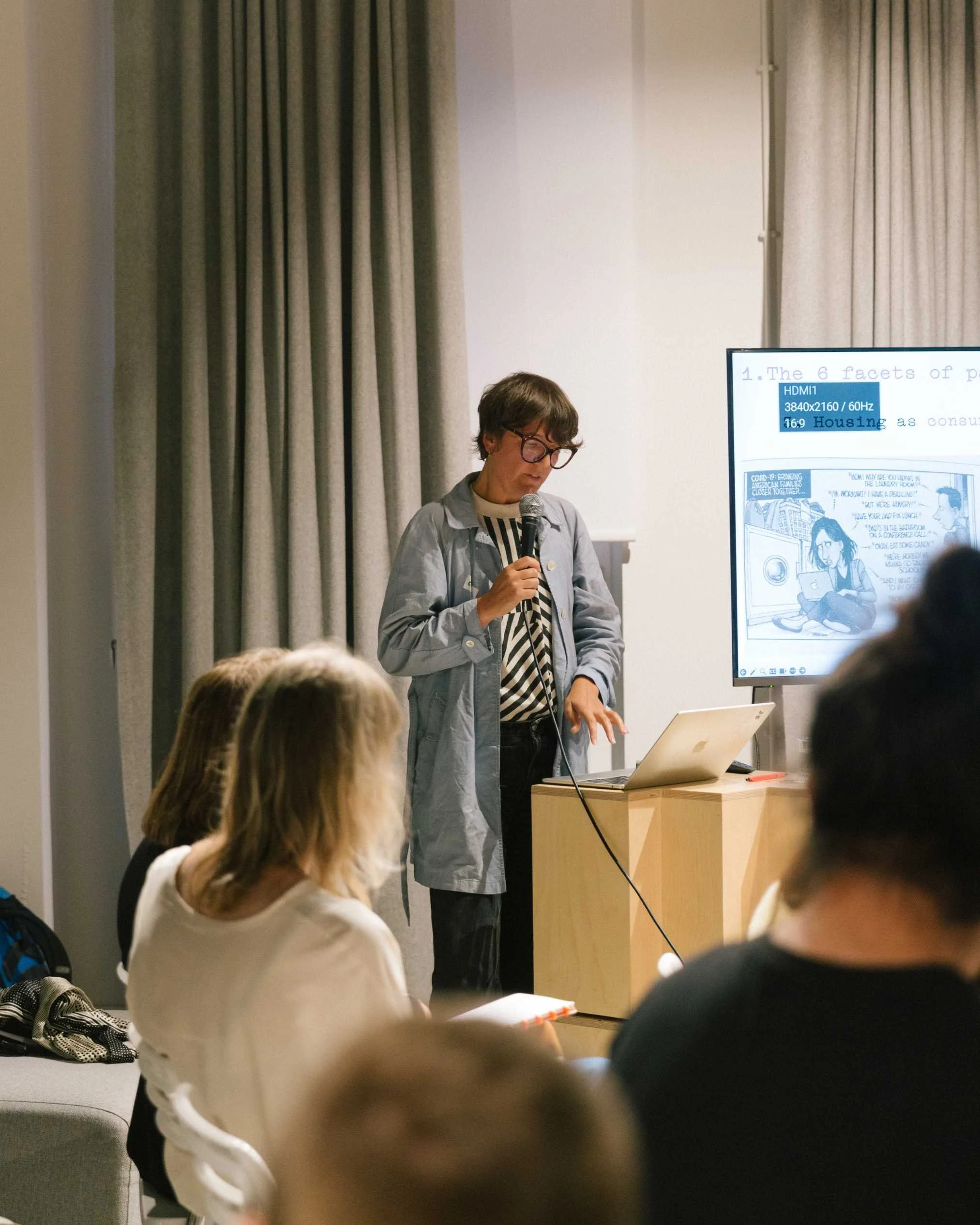
How could our living environments and housing be different if we start from feminist values in our design practices? What is the role of housing in gender issues, and what can we learn from feminist approaches to change our ways of living together? These were the starting questions on 11 September 2025 for a conversation with three experts engaged with the Brussels-based feminist housing collective Angela.D: Chloé Salembier, Katrien Van Cappellen, and Giulia Catarina Verga from the architecture office Karbon’, with whom Angela.D collaborates. This report gives an accessible overview of the ideas and projects the speakers shared, and offers a gentle entry point into feminist housing, with links to further readings and references along the way.
Text: Vincent Van Praet
Photos: Tatjana Huong Henderieckx
This article is divided into six chapters. Click on a chapter to unfold it and start reading.
Listen to the full audio recording of the discussion evening.
Chloé Salembier, professor at the Faculty of Architecture, Architectural Engineering and Urban Planning at UCLouvain, provides a theoretical introduction to feminist housing research, illustrating how housing is not neutral but a social marker of inequality between men and women (Chapter 1). As a founding and board member, she also presents Angela.D, a Brussels-based feminist collective founded in 2018 that brings together activists, architects, urban planners, and sociologists (Chapter 2). Angela.D focuses on developing gender-sensitive policies and training professionals, building communities of solidarity and collective action among minorities, and developing concrete projects in the Brussels context such as the housing projects Calico (Care and Living in Community) and FEM's (Femmes en situation de monoparentalité – women in single-parenting situations). The feminist values within Angela.D are intended to support a broadly defined group, including women of colour, transgender women, non-binary people, and minorities in general. The lecture was ended by a series of recommendations, including reference projects, to deploy housing as a site for feminist transformation (Chapter 6).
Katrien Van Cappellen, a board member of Angela.D who joined the collective in 2021 and is a resident of the Calico project, offers a more in-depth account of the lived experience within the Calico project (Chapter 3). As the driving force behind the FEM’s project, she also explains its development process and objectives (Chapter 4).
Giulia Catarina Verga is an architect and urban designer at the Brussels-based office Karbon’ architecture et urbanisme and a PhD researcher at the ULB. Karbon’ is collaborating with Angela.D on the renovation of the Gandhi Towers in Molenbeek, and Giulia Catarina Verga provides insight into the socio-spatial design and collaborative process behind the project (Chapter 5). Karbon’ is a Brussels-based cooperative of architects, designers, and planners with diverse expertise, often working on and with practices grounded in care. Karbon’ is also finalizing a Brussels-based study on gender at the territorial planning scale.
-
Chloé Salembier illustrated how the historical socio-spatial organization of housing contributes to the production and reproduction of power relations between men and women. Studies on the integration of gender into architecture and urban planning highlight that our housing and living environments inherit patriarchal and heteronormative values in the way they are produced.
THE 19th CENTURY: the isolation of women through the development of suburbia
Nancy Fraser describes how during the 19th century — characterised by competitive liberal capitalism, industrial exploitation, colonial expropriation, the absence of a welfare state, and a new bourgeois imaginary of domesticity — two separate spheres (the domestic and the productive) were established, placing women within the private family to take care of reproductive work (tasks associated with servicing and supporting the productive workforce). In this context, all care work was socially devalued, largely invisible behind walls, and performed for free.
The binary model of the productive and domestic spheres in the Western city, emerging from the industrial revolution and capitalism, was intensified by certain housing typologies and planning instruments. The provision of suburban housing on the periphery of cities had various consequences for women: distance from the city centre isolated them from service infrastructure and their communities; individual family ownership through debt led to long-term confinement, constraining the possibility of relocation; and the large suburban houses increased the burden of domestic work. Despite these consequences, Western countries today still encourage individual ownership and the development of suburban areas through housing policies and urban planning.
THE FIRST WORLD WAR: Housing as a space for consumption
After the First World War, the industrial revolution encouraged a new consumer society in which middle-class women were increasingly targeted to consume new technological objects that supposedly simplified their lives. However, the opposite proved true. While new technologies can make domestic work easier, two factors prevented women from being liberated. First, rising standards regarding reproductive labour led to increased domestic workloads (we wash our clothes far more frequently, cooking has become more elaborate, etc.). Second, domestic servants (both paid servants and unpaid family members) disappeared, leaving domestic labour to middle-class women.
1970s-2000s: housing as a commodity
During the 1970s and 1980s, the commodification of housing accelerated, and this shift was particularly detrimental to women. The housing crisis in European cities led to increased discrimination against women and inadequate housing disproportionately affects single parents, families, elderly people, and individuals living alone — with women overrepresented in each of these categories. Ironically, women are more affected by inadequate housing while simultaneously being positioned by society as responsible for the majority of domestic labour.
When looking at housing conditions within the domestic sphere, women often face greater challenges in securing their own space. Even today, “a room of one’s own” is not always guaranteed for women. Based on studies of Irwin Altman and Arza Churchman, when women do occupy domestic spaces, they tend to share them more often than their male counterparts and additional rooms in the home are more frequently allocated to men.
To conclude, access to qualitative housing and space is shaped by marital status, care responsibilities, economic conditions, and social representations — all of which are influenced by gender, a dimension that still remains largely overlooked. While the private home can be understood as a contested space that reproduces gender inequality, the media, consumer culture, and conservative ideology in the West continue to promote a stereotypical image of the home as a place of rest, leisure, tranquillity, and security where the nuclear family can supposedly flourish harmoniously. This stereotypical image continues to influence the historically male-dominated fields of architecture and urban planning.
The first wave of feminism: collectivizing domestic labour
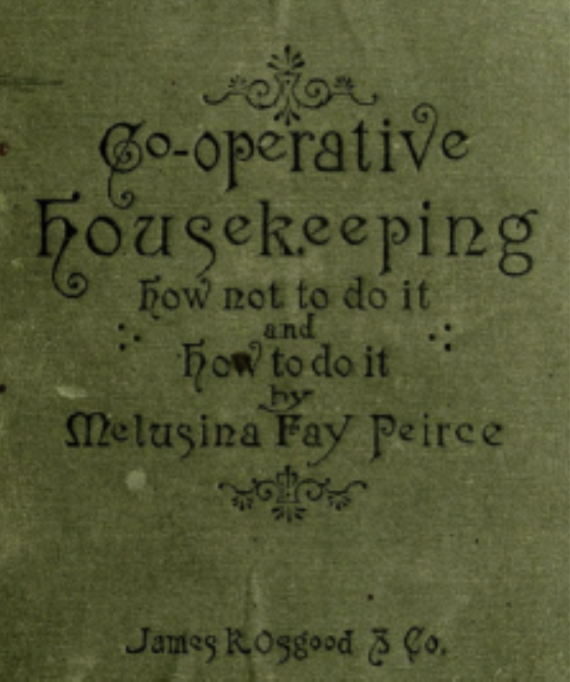
Three waves of feminism engaged with housing in different ways. The first wave of feminism, beginning in the mid-19th century and focusing on civil rights for women — including the right to vote — identified domestic labour as a source of women’s economic and intellectual oppression. Feminists advocated for the development of housekeeping cooperatives that would allow women to carry out domestic tasks collectively and receive compensation from their husbands. The reorganisation of neighbourhood and housing design was seen as a tool to facilitate such forms of domestic cooperation among women.
The second wave of feminism: externalizing domestic labour
The second wave of feminism, beginning in the early 1960s, introduced the slogan “The Personal is Political” and focused on issues such as sexuality, women’s roles within the family, and domestic violence. Based on studies of Christine Delphy and Diana Leonard, the family was understood as a site of oppression and exploitation, where women were responsible for domestic labour exclusively. Bringing domestic labour back to the forefront of feminist debate, second-wave feminists denounced the isolation in which the work was performed, its lack of pay, and its lack of societal recognition.
Predominantly white, European feminists advocated for the mass entry of paid workers into the household, which resulted in the abandonment of the domestic sphere as a site of feminist activism. The home became a blind spot in gender studies, viewed primarily as an oppressive space rather than a site of feminist transformation.
Today, the issue of housing as a site of labour exploitation is gaining renewed attention in Belgium. According to studies by the Institut pour l’égalité des femmes et des hommes, average women perform ten more hours of domestic work per week than their male counterparts, revealing a persistent inequality between women and men. While in some population groups — especially those with higher incomes — an illusion of equality may exist, these statistics have changed very little over time. When changes do occur, they are not due to greater involvement of men, but rather to the outsourcing of tasks to external workers, often from lower-income households.
Although women perform around four hours of reproductive labour per day within the home, housing design does not always take this work into account. The Spanish cooperative Col·lectiu Punt 6 studied the laundry cycle in the household, highlighting that this involves a sequence of tasks and movements — collecting, sorting, washing, hanging, ironing, folding, putting away, etc. — which is rarely considered in housing design. Another study showed that the location of the laundry room is often neglected: hidden away in rooms without natural light or ventilation, and of low architectural quality.
The third wave of feminism: global care chains, gender socialization and domestic violence
The third wave of feminism, characterised by transnational and interdisciplinary perspectives, moved beyond the viewpoints of middle-class white women who had focused their emancipation efforts outside the domestic sphere. bell hooks highlights in the book Feminist Theory from Margin to Center how white women shifted domestic labour to poorer women of colour, reinforcing inequality between the global South and the global North by transferring care work from richer to poorer, often migrant, families. Nancy Fraser describes this phenomenon as the “global care chains”.
Looking back at the domestic sphere, it is also identified as the space where the first differentiated socialisation of children occurs. Socialisation refers to the set of processes through which an individual is shaped by the global and local society in which they live, acquiring a socially situated way of doing, thinking, and being. Gender socialisation encourages women to devote more time to care tasks and to feel insecure in public spaces, while encouraging men to internalise masculine values such as competition, strength, and power. Housing is a key environment where children internalise such dichotomous gender norms through imitation, and the spatial organisation of the home can contribute to the shaping of gender identities and power relations between the sexes.
Lastly, housing can be understood as a space of power and violence. Research in Les expériences des femmes et des hommes en matière de violence psychologique, physique et sexuelle, illustrates that while men are more likely to experience violence in public spaces, the violence suffered by women mainly occurs within the home, is perpetrated by someone close to them, and is repetitive in nature. Most of this violence takes place in the kitchen and the bedroom. Statistics in the United States indicate that a woman is beaten every 30 seconds. According to Evangelina San Martin, when domestic violence circulates in spaces of domesticity, it leads to a shrinkage of available space for women and contributes to their spatial disengagement.
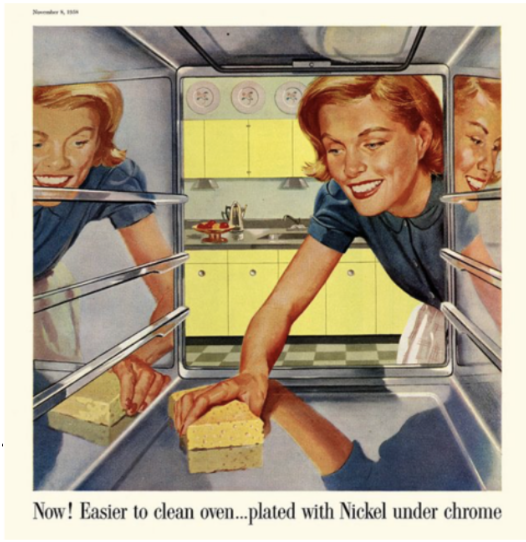


“Middle-class housewives, the women who must have first felt the impact of the new household technology, were not flocking into the divorce courts or the labour market or the forums of political protest in the years immediately after the revolution in their work. What they were doing was sterilizing baby bottles, shepherding their children to dancing classes and music lessons, planning nutritious meals, shopping for new clothes, studying child psychology, and hand stitching colour-coordinated curtains-all of which chores (and others like them) the standard sociological model has apparently not provided for.” - Ruth Schwartz Cowan, 1976, p.9
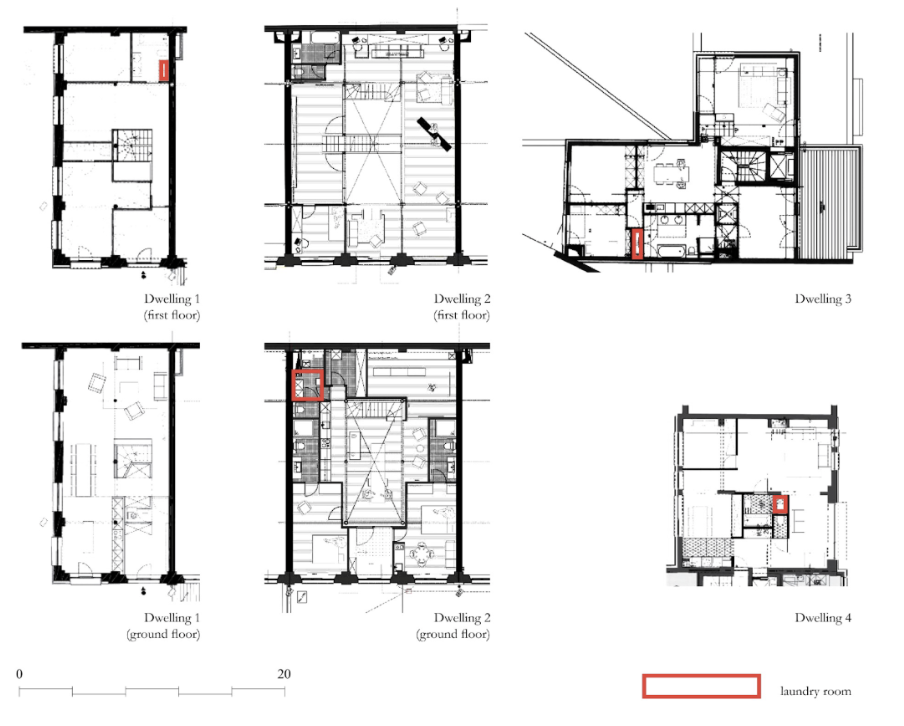
Casa Nova apartments, kitchen position (drawn by Ledent, 2019).
-
The collective Angela.D positions the domestic sphere as a space for feminist action, bringing together feminism and the housing rights movement in Brussels. It is a multidisciplinary collective of activists, urban planners, architects, sociologists, educators, and members from many other fields, including women who want to live together and create community. The goal of Angela.D is to draw attention to housing as a social marker of inequality between men and women, to contribute to fair policies for women, and to reduce the obstacles that hinder women’s autonomy.
The name Angela.D refers to the African-American human rights activist Angela.Davis, but it is also an acronym for Association Novatrice pour Gérer Ensemble le Logement et Agir Durablement (Innovative Association for Self-Managed Community and Sustainable Action). The collective emerged from various questions such as “How can we access decent and affordable housing?” and “How can we age well together as feminists?” They visited feminist housing projects in Vienna, Barcelona, and Montreuil. Through creating shared knowledge based on the housing experiences of women in the collective, Angela.D developed organised mobilisation, political advocacy, and a feminist perspective on the right to housing.
Angela.D has three main areas of action:
The workshop enables women within Angela.D to access housing that aligns with the values and vision of the collective and develops appropriate tools to make this possible.
The street aims to develop training programmes on gender issues for public and private housing stakeholders and policies, and to raise awareness of feminist housing principles among a broader audience.
The café is intended to care for Angela.D and all its members by ensuring good governance, supporting the well-being of members and employees, and organising activities for community building.
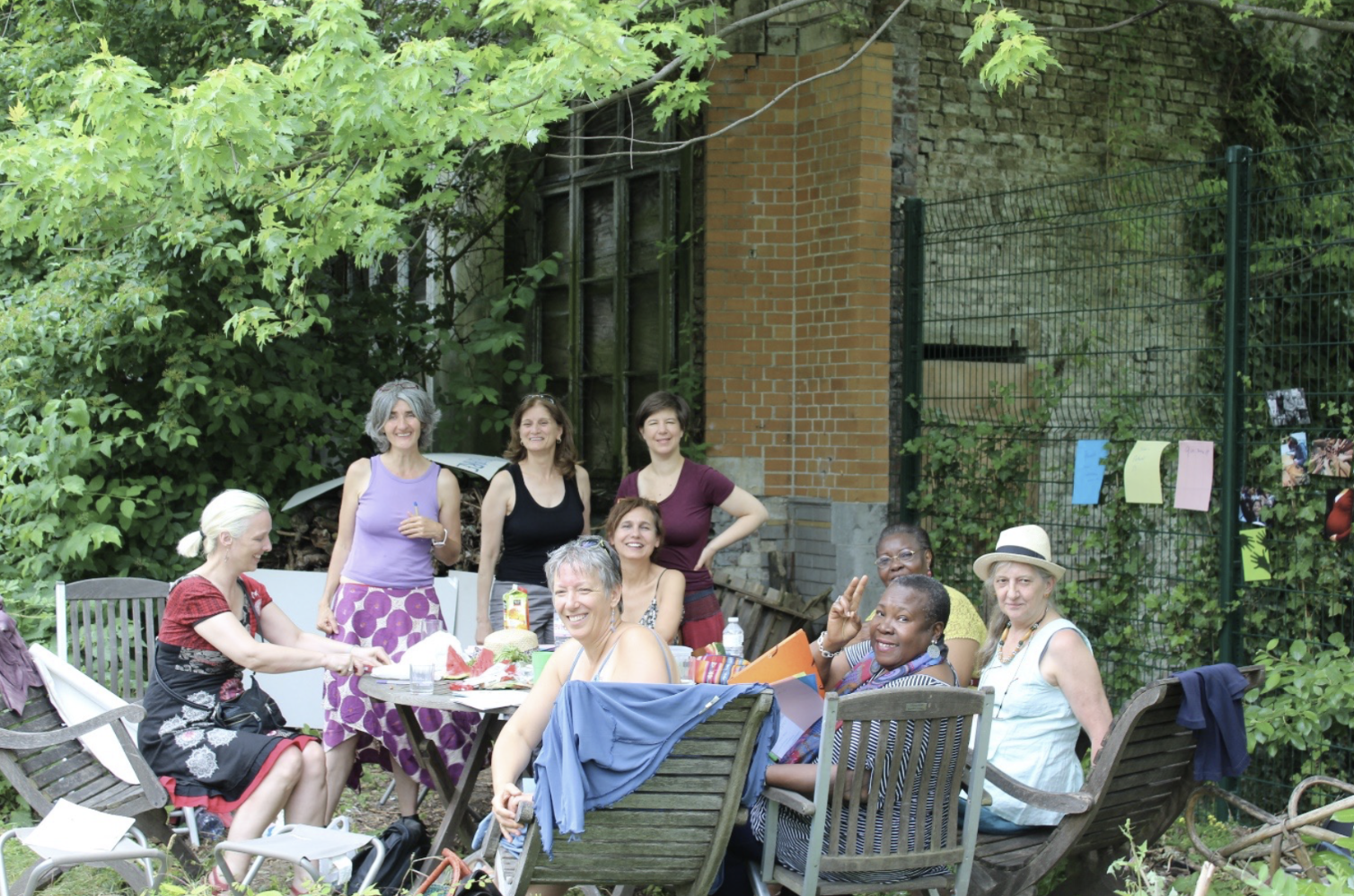
The Angela.D collective in 2017
-
Calico is a co-housing project in Forest (Brussels) consisting of 34 apartments that provide egalitarian, supportive, and intergenerational housing in interaction with the broader neighbourhood. The housing is provided within the framework of Community Land Trust Brussels (CLTB), which means the land is managed as a common good by the CLTB and its members. By securing the land through a public utility foundation, Calico becomes an anti-speculative project and ensures long-term affordability. The housing is divided among different actors: Passage, Angela.D, CLTB, and the CPAS/OCMW which rents out two apartments according to the Housing First principle.
In addition to the housing units, several collective spaces are included in the building. The project contains a place for birth and end of life, integrating these life cycles into a community-oriented environment supported by loved ones. There is a consultation space at the top of the building and a collective room on the ground floor, which can be opened to anyone in the neighbourhood who wants to organise activities. One apartment is not rented out and is used as a shared space for Calico residents. Finally, on the ground floor, there is a passage leading to the collective garden, which is also open to the neighbourhood during daytime hours.
Calico is an inclusive and participatory project, meaning that all inhabitants take part in the decision-making process. Different resident committees have been set up to plan and decide how everyone wants to live together, such as working groups on governance, common spaces, communication, children, garden, etc. Through these working groups, collective management practices were established, including the use of the “joker rooms,” which became a guest room and a hangout space. The collective kitchen is used for shared meals, and this year a vegetable garden was installed. The residents of the Angela.D apartments are mostly elderly people, women, and single mothers.
One of the challenges of such intensive self-management is preventing people from becoming overburdened. At the start, meetings were held once a month, but this eventually shifted to once every two or three months — an expected evolution as groups move through different stages. Alongside these meetings, it is important to make room for social activities such as shared meals every two weeks. Knowing all the neighbours helps create a secure environment for single mothers with children and strengthens informal forms of care.
Ideally, projects developed by CLTB and Angela.D are designed from the start together with the inhabitants, which makes it possible to apply principles of feminist housing into the architecture of the building. However, for Calico this was not possible since the building was purchased from a real estate development agency rather than designed from scratch. Fortunately, the existing layout — with its variety in room sizes, open ground floor, and garden at the back — fit well with the project’s vision. The FEM’s project, which was developed from the bottom up, and the renovation of the Gandhi Towers in collaboration with Karbon’ were later used to test principles of feminist housing for the design of a building.
After three years of collaboration with different partners, Angela.D set up a guide with recommendations for feminist housing based on the CALICO project. The Guide draws on the experience of the Angela D. association and offers a series of recommendations on how to integrate gender issues into housing projects.
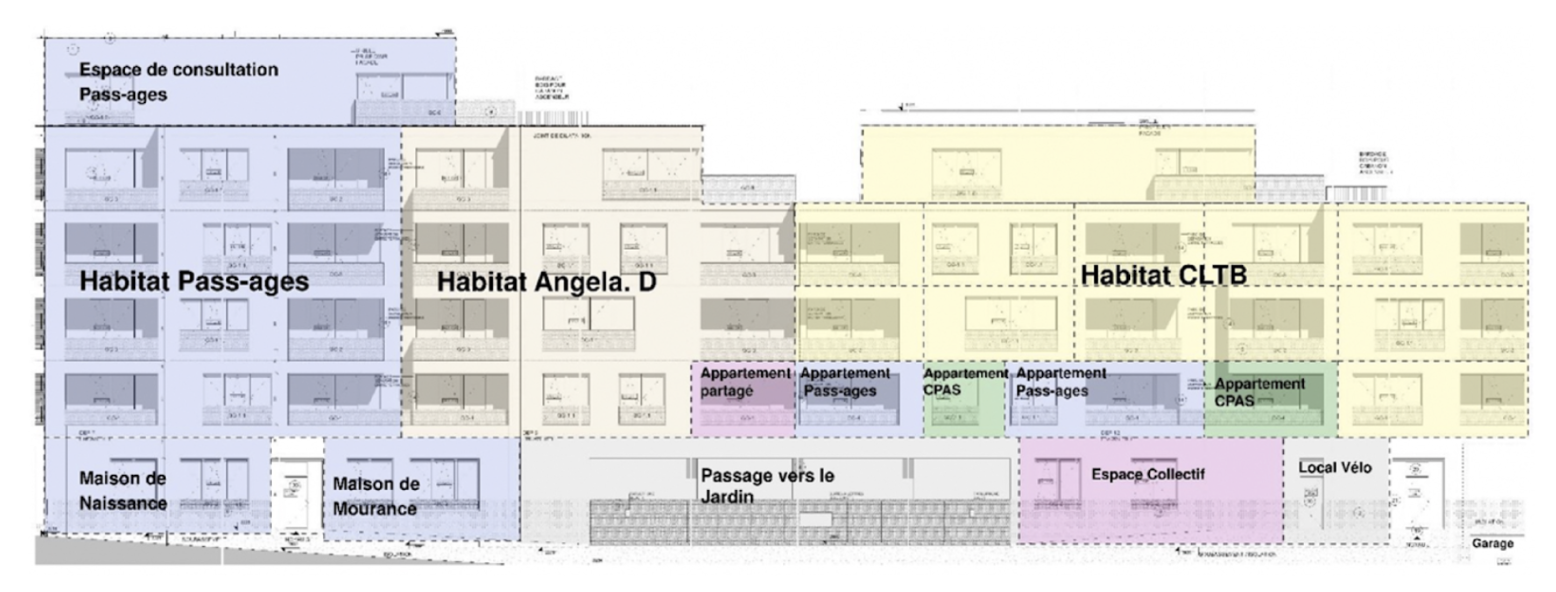
Façade view of the building showing the division between the different stakeholders
-
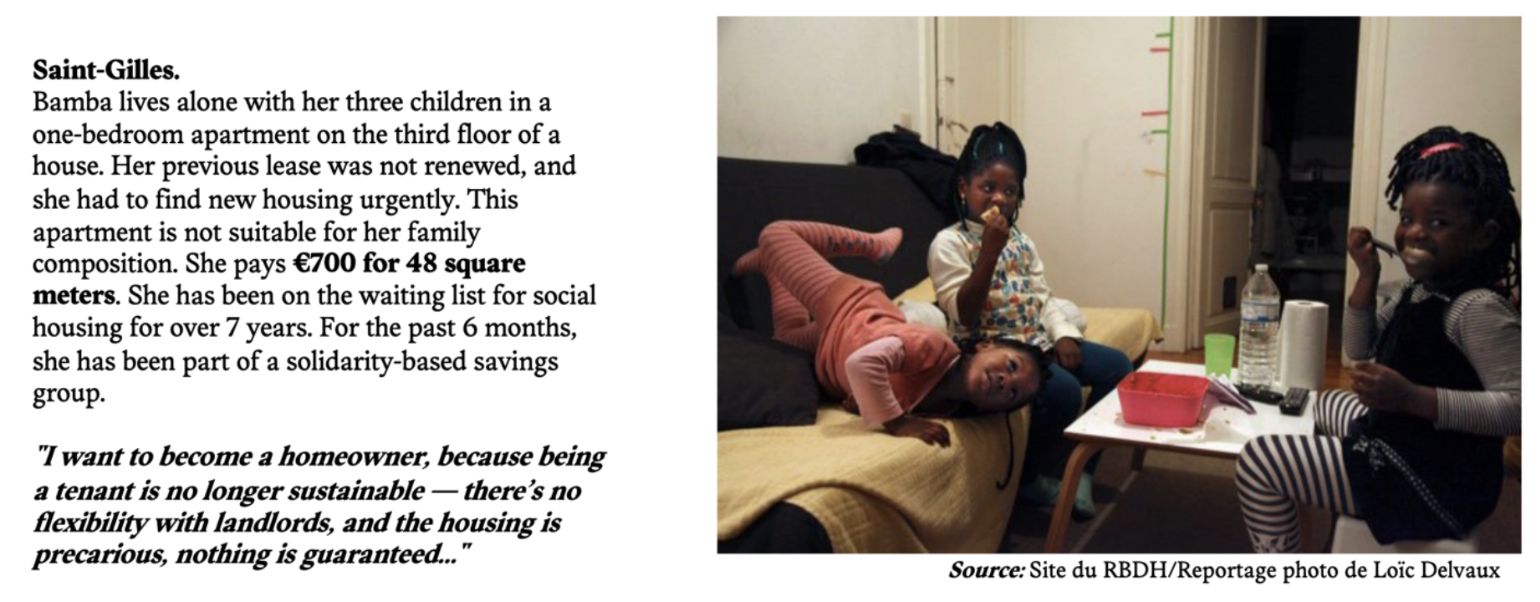
FEM’s was started in 2022 by two single mothers. It is a non-speculative housing project created for and by single mothers, aiming to provide access to collective property for women in a single-parent situation. A “single mother” refers to a woman who, for the most part, solely bears the day-to-day care — mental, economic, emotional, and educational — of her children. All participants share the experience of living in precarious housing and aspire to offer themselves and their children a dignified place to live in a community setting. Since single mothers are among the groups suffering the most from poor housing conditions, FEM’s aims to provide concrete solutions for access to housing adapted to single-parent families. The project seeks to design an innovative housing model capable of responding to the many difficulties faced by these families, offering an alternative to the co-parenting model of the nuclear family.
Cohousing is seen as a response to the various challenges many single mothers face, such as financial difficulties, social isolation, lack of time, and the absence of a secure environment for children. The FEM’s model is a pilot project that tests different principles of feminist housing and community living, which can later be shared with other groups of single parents.
Since January 2022, Angela.D has been supporting FEM’s, and since June a subsidy has enabled the collective to pay someone within Angela.D to work on the project. While FEM’s began with two mothers, the group has grown to seven and currently consists of five active members. The group visited several reference projects, and with a second subsidy, they were able to organise workshops on the design, creation, and vision of how to live together, including the legal and financial framework. Much of the work revolves around group decision-making: How do we deal with conflicts? How do we want to organise co-parenting? Are we willing to consider a house outside Brussels? Currently, they have established many partnerships but are still searching for a fitting site or existing building to realize the project.
-
The renovation of the Gandhi Towers is carried out by the social housing agency of Molenbeek, Logement Molenbeekois, which has developed a clear commitment relating to many different themes, including a gender perspective on housing. Logement Molenbeekois provided specifications that mentioned the need to include an expert on gender, and their engagement was key to bringing principles of feminist housing into the project. Their broader mission included gaining an understanding of feminist housing within the Brussels Region, and therefore a guide on feminist housing was added as an appendix to the project specifications. This guide on feminist housing was written for the Brussels government by a workgroup on feminist housing, of which Angela.D was part of.
Including the criteria of gender in the project definition was crucial to enable the concrete spatialisation of feminist principles within the design. By having a member of Angela.D complete an internship at the regional governance, she was able to organise a working group on the inclusion of a gender perspective in regulations for social housing construction and renovation. This will eventually result in updated urban regulations. At the same time, Logement Molenbeekois was writing its project definition and decided to anticipate these new urban regulations by already integrating the gender perspective into the specifications for the renovation of the Gandhi Towers. This illustrates how essential it is to have the right person at the right time in the right place: the intern was able to develop the gender perspective through working groups within the regional government and previous work for the Calico project allowed to strengthen the collaboration. It was the right moment because both the government was open to developing the gender perspective further and the social housing company was ready to work on the topic as part of the renovation of the Gandhi Towers.
The Gandhi Towers are a series of five towers, two of them in very poor conditions, in Molenbeek. The project consists of a complete renovation, incorporating circular economy principles, of 102 social housing units, including the reorganisation of interior spaces, the development of private and shared outdoor spaces, and the creation of two neighbourhood facilities. The project aimed to develop a participatory process that would engage people from within the neighbourhood and beyond, allowing them to give their opinions and feedback. The collaboration with Angela.D was intended to translate feminist knowledge into an architectural approach, bringing in examples and expertise related to spaces of care.
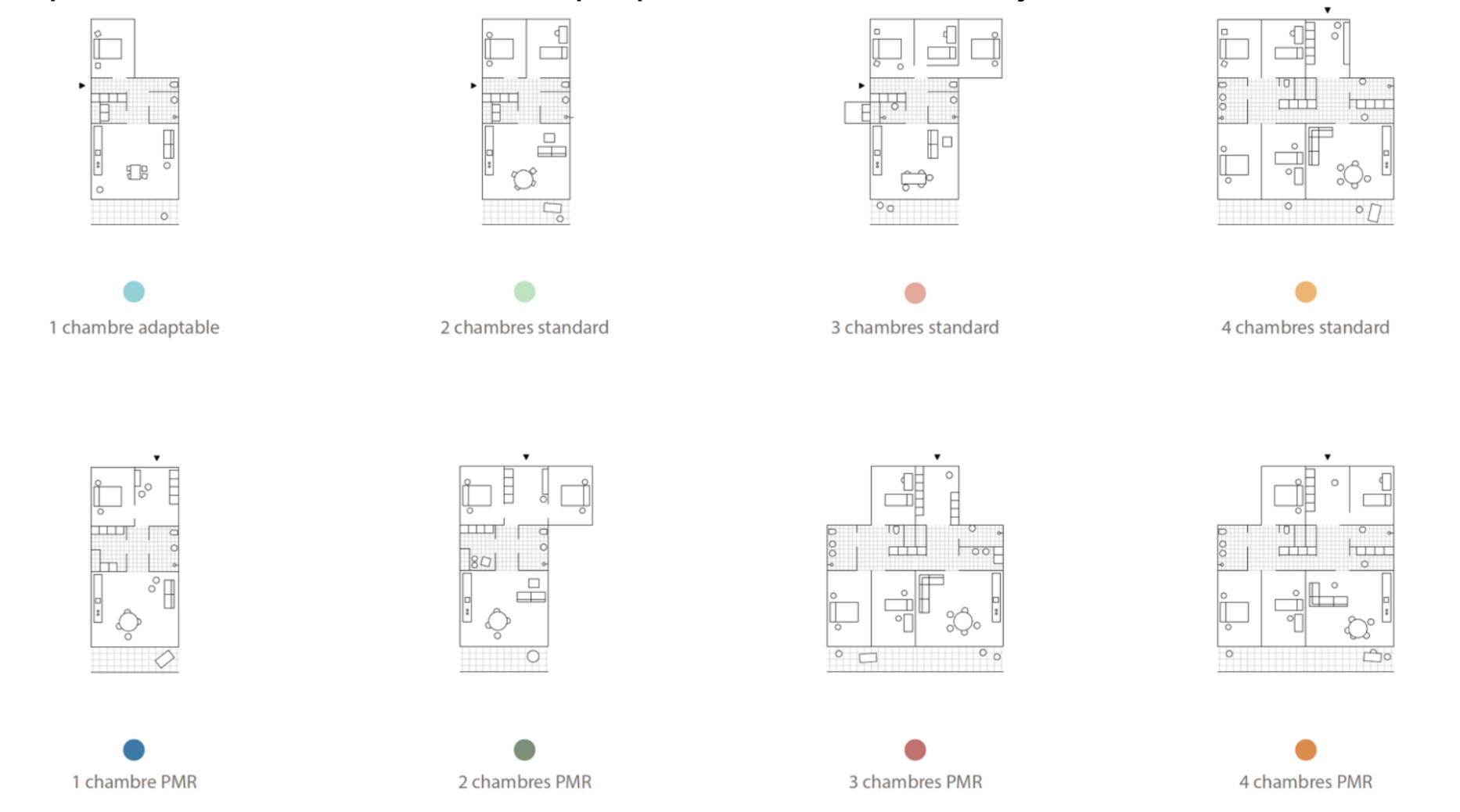
Translating the principles of feminist housing into the Gandhi Towers resulted in specific spatial design decisions:
To provide more space for practices related to care and domesticity, areas such as entrances and storage spaces were made larger than usual.
The regulation requiring one large bedroom of 14 m² and smaller bedrooms of 9 m² is based on an outdated representation of the nuclear family. Since families today are structured in many different ways, all bedrooms were designed to be approximately the same size. This approach aligned well with the existing structure of the towers, which already provided a framework of equal spaces.
Laundry rooms, often neglected by designers and tucked away in small corners, were given more generous and functional spaces.
The design allows families to either close off or open up the kitchen, as this often depends on cultural background.
To offer a private terrace that can be used in different ways.
Instead of offering only a few units adapted for people with reduced mobility, most apartments were designed to be adaptable, allowing spaces to be swapped or transformed. Walls can be removed to convert a standard apartment into one accessible for people with reduced mobility.
Circulation and access to the apartments were also key elements from a feminist perspective. Originally, the building had dark interior corridors; instead, a series of balconies was added to the exterior to provide access to the apartments. These were designed generously to support encounters, social interaction, and safety. The northern corridor provides access to the apartments, the wider sides allow both circulation and lingering, while the southern part consists of private terraces.
Angela.D specifically suggested providing collective spaces for some or all residents. This resulted in a series of “joker rooms” that can be managed in a participatory manner, allowing the community to collectively decide their use. Since social housing is often overcrowded, these rooms can serve as study spaces, guest rooms, kitchens for larger groups, etc.
As a general principle, it was important to provide a flexible design that could be adapted and appropriated by different types of families and diverse resident needs. By engaging with people, designers can learn how residents prefer to access and inhabit their apartments. This approach also shaped the design of the public facilities and the ground floor. Small but significant details — such as where to park bikes or strollers, where to place the laundry room, or where to position the mailboxes — were informed by this process.
Finally, the participatory process was organised through a feminist lens and was closely intertwined with the design process. It was therefore important to be on site at different hours and on different days, enabling engagement with everyday life and interaction with a diverse range of people. Participation was understood as more than simply expecting people to attend workshops during their leisure time. A common challenge is the lack of time, so flexibility and proactivity are needed to build and maintain participatory momentum. Even for more technical and material aspects, time must be allocated for participation.
For such an in-depth participatory process, it is crucial for architectural practices to work with professionals trained and sensitive to the social sciences, such as urban anthropologists, sociologists, and community development workers. Architects themselves must be flexible and dynamic, able to adapt their methods, learn about gender perspectives, and conduct such participatory processes. Ideally, an architectural practice should have an interdisciplinary team and establish strong collaborations with experts in social and gender-related fields.
Can projects such as Calico, FEM’s, and the Gandhi Towers be translated to different contexts? This depends on many factors. Within a far-right government, it is certainly not possible to implement a feminist project. The former Brussels government was pro-feminist and aware of the challenges of the care crisis and demographic changes. The minister responsible for Housing also oversaw the department of Equality, which helped bring these two topics together and created an opportunity for Angela.D. European funding also played a role in the development of Calico, and the European project Co-Calico is currently working on developing lessons learned that can inspire five other European cities.
-
Western society is currently affected by multiple crises such as the housing crisis, the care crisis, the social crisis, and the environmental crisis. On top of this, the Covid crisis left its mark by accentuating spatial and gender inequalities. While some people were able to work remotely in comfortable conditions, others found themselves confined to cramped and unsuitable housing and the increased domestic workload primarily affected women. The Covid crisis led to a collective awakening of the need to reflect on the political dimension of private space and the urgency to design and provide inclusive and affordable housing.
1. The environment that best suits women's needs is the city
In the transition towards a more equal society, women benefit from living in urban areas because cities provide access to essential services, facilitate mobility related to care work, support the diverse social roles women take on, promote women’s participation in public life, and prevent marginalisation. However, this recommendation must be nuanced: queer experiences highlights that due to discrimination faced by LGBTQIA+ communities, some women and men prefer to live in rural areas within peer communities, such as separatist lesbian communities like Womyn’s Land or the Radical Faeries movement in the USA. Jack Halberstam’s concept of metronormativity — suggesting that urban life is always more liberating or inclusive for queer communities — can overlook the lived realities of marginalised groups in urban contexts.
2. The intermediate scale as a space for resilience and empowerment
It is important for socio-spatial designers to work at the intermediate scale, as demonstrated in the Gandhi Towers project. This scale lies between the domestic and public spheres and includes circulation and collective spaces. The location, diversity, quality, governance, and quantity of these intermediate spaces in and around housing all play a role in fostering social interaction. They soften the binarity between private and public space, enabling the sharing and visibility of reproductive labour. Prioritising the intermediate scale is central to both feminist academic work and concrete housing projects designed by and for women. By providing multiple and varied spaces for social interaction around the home, domestic violence can be reduced, feelings of confinement alleviated, and rigid social roles imposed on women disrupted.
The housing cooperative La Borda in Barcelona includes shared kitchens where residents prepare meals and laundry rooms located in well-designed intermediate spaces. By giving the laundry room such central visibility, the social value of care work is highlighted, and this labour is no longer confined to a single small room without natural light or ventilation. Such intermediate spaces require alternative governance models to manage these commons: How will they be used? By whom? Decision-making must return to the users, bringing politics back into the domestic sphere.
3. Designing space from the perspective of care work
Throughout architectural history, various models have been developed to relieve women of the burden of domestic labour. This often occurred through externalisation or outsourcing, as seen in a Swedish housing project from 1934 that included a communal kitchen staffed by a paid cook serving the entire community through a system of elevators. Other approaches focus on mutualisation, as in a 1984 Stockholm housing project where domestic labour is self-managed, collectivised, and distributed among residents through shared spaces such as a dining room, laundry room, playroom, creative workshop, etc. In exchange for large collective spaces, private dwellings were reduced in size. Such innovative housing models require progressive public housing policies to emerge.
Housing must be designed by collectively rethinking domestic labour, facilitating it, and making the care work visible. For each space, the design should consider who will clean it, how it will be cleaned, with what resources, and for whose benefit. When architects design housing, they often imagine rest and leisure; when designing libraries, they think of readers and passersby. Yet design should also consider who works in those spaces, who faces constraints, and who is invisibly present.
The municipality of Bogotá has taken significant steps toward recognising and addressing care work. Through participatory workshops and statistical analysis, they showed that nine out of ten women and six out of ten men in Bogotá perform unpaid care work. In response, the municipality designed a territorial strategy to implement care services — offered by the state, the private sector, or community organisations — within a neighbourhood-based “District Care System”. “Blocks of Care” where implemented with a dual purpose: increasing accessibility to care services for the most vulnerable and relieving women of the burden of care work so they can pursue their aspirations through training and professional support.
Other municipalities engaged in gender mainstreaming include Vienna and Barcelona. Since the 1990s, the City of Vienna has organised exhibitions on women’s role in the city and has established a “Women’s Office,” which has developed multiple housing projects such as the Frauen-Werk-Stadt. Similarly, the City of Barcelona addresses care work at the neighbourhood scale through the work of Col·lectiu Punt 6.
4. Women's participation in decision-making processes
How can women be involved in decision-making processes related to their living environment when they are absent from public debate and public space? By meeting women where they feel legitimate and comfortable expressing themselves. Therefore, the participation of minority groups must be encouraged by adapting the organisation of meetings, providing childcare, holding meetings in accessible spaces, and engaging with associations that work with marginalised populations in public spaces. When marginalised people do attend participatory meetings, their ability to express themselves must be supported through specific measures such as non-mixed (single-gender or affinity) spaces, public speaking training, accessible and understandable participation methods, and small-group processes. Finally, once marginalised voices are expressed, the participatory process must ensure that no contributions are dismissed, avoiding the disqualification of any voices and making users’ lived realities visible.
5. Taking housing out of speculative logic
To meet the four previous recommendations, it is essential to remove housing from speculative market logic. Third-way approaches to homeownership — such as housing cooperatives or community land trusts — help secure long-term community value through non-speculative land systems. Social and collective ownership of land or housing is better suited to implementing transformative approaches to housing.
To conclude, feminism is a movement of social transformation, and housing is described as a space for feminist transformation because it can initiate and accommodate gender equality. Gender is a lens — alongside class, origin, or age — that reveals how social roles, practices, and representations are shaped, and exposes the inequalities arising from them. Inequality of access to housing has traditionally been explained through statistical analyses of class, with little attention to gender. A gender-informed analysis opens the possibility of social transformation that responds to contemporary challenges such as social isolation, housing shortages, care responsibilities, and demographic changes. Gender perspectives highlight that we are not all affected in the same way by these crises; our experiences vary depending on income, gender, origin, and more.
How do we address these inequalities and challenges? While the workspace is often seen as a space of emancipation for women, people with disabilities, and other marginalised groups, Angela.D explores the hypothesis that housing should also be understood as a space of emancipation, learning, and political engagement. The feminist slogan “The personal is political” refers to the idea that the domestic sphere is profoundly political, even though public policies have historically overlooked these issues.
Transformation can be driven by using gender as an analytical tool, shifting the focus to recognise not only workspace or public space but also housing as a site for transformation. By framing housing as a political space, changing governmental structures, and transforming architectural practice by encouraging women’s participation, we can design more inclusive spaces that meet the needs of the most vulnerable. Feminist housing reveals the potential of domestic spaces to support changes within the home that can extend beyond the private sphere, influencing the urban and political spheres — and ultimately transforming the housing conditions of all marginalised people.
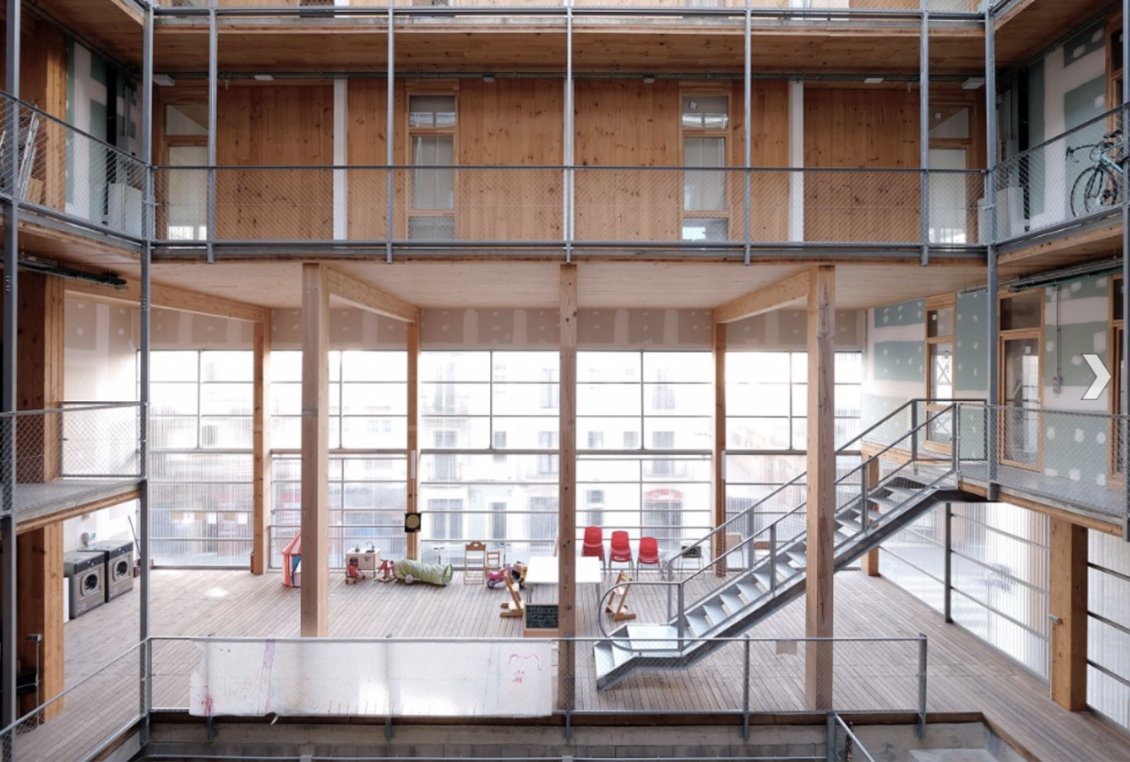
LA BORDA, Cooperativa d’habitage, Barcelona - 2018
References
Ahrentzen, S., Levine, D.W., & Michelson, W. (1989). Space, time, and activity in the home: A gender analysis. Journal of Environmental Psychology, 9(2), 89–101. doi:10.1016/S0272-4944(89)80001-5
Altman, I., & Churchman, A. (1994). Women and the environment. New York: Springer US.
Davis, A. (1981). Women, Race, & Class. Knopf Doubleday Publishing Group. https://books.google.be/books?id=74QzFiv1w10C
Delphy, C. (1984) Close to Home: A Materialist Analysis of Women’s Oppression. London: Hutchinson, & The University of Massachusetts Press.
Delphy, C., & Leonard, D. (2019). L’exploitation domestique. Paris: Syllepse.
Fraser, N. (2016). Contradictions of Capital and Care. New Left review. 99-117.
Fay Pierce, M. (1884) Co-operative Housekeeping: how not to do it and how to do it. Boston, James R. Osgood.
Institut pour l’égalité des femmes et des hommes (2016) Genre et emploi du temps – (non) évolution des stéréotypes de genre 1999, 2005 et 2013. https://igvm-iefh.belgium.be/sites/default/files/95_-_genre_et_emploi_du_temps_fr.pdf
Halberstam J. (2005), In a Queer Time and Place: Transgender Bodies, Subcultural Lives, New York, New York University Press.
Hayden, D. (1980). What would a non-sexist city be like? Speculations on housing, urban design, and human work. Signs, 5(3), S170-S187. Retrieved from: http:// www.jstor.org/stable/3173814
hooks, b. (1984). Feminist Theory from Margin to Center. South End Press. https://books.google.be/books?id=VnhWKl64XDgC
Ledent, G., & Salembier, C. (2021). Co-Housing to Ease and Share Household Chores? Spatial Visibility and Collective Deliberation as Levers for Gender Equality. Buildings, 11(5), 189. https://doi.org/10.3390/buildings11050189
Pieters, J., Italiano, P., Offermans, A.-M., & Hellemans, S. (2010). Les expériences des femmes et des hommes en matière de violence psychologique, physique et sexuelle. Brussels: Institut pour l’égalité des femmes et des hommes.
San Martin, E. (2019). La dimension spatiale de la violence conjugale (Doctoral dissertation). Retrieved from: https://theses.hal.science/tel-02898938/document
Schwartz Cowan, R. (1976). The “Industrial Revolution” in the Home: Household Technology and Social Change in the 20th Century. Technology and Culture, 17(1), 1–23. https://doi.org/10.2307/3103251
